Milo had never shouted at a grown-up before. He was about to.
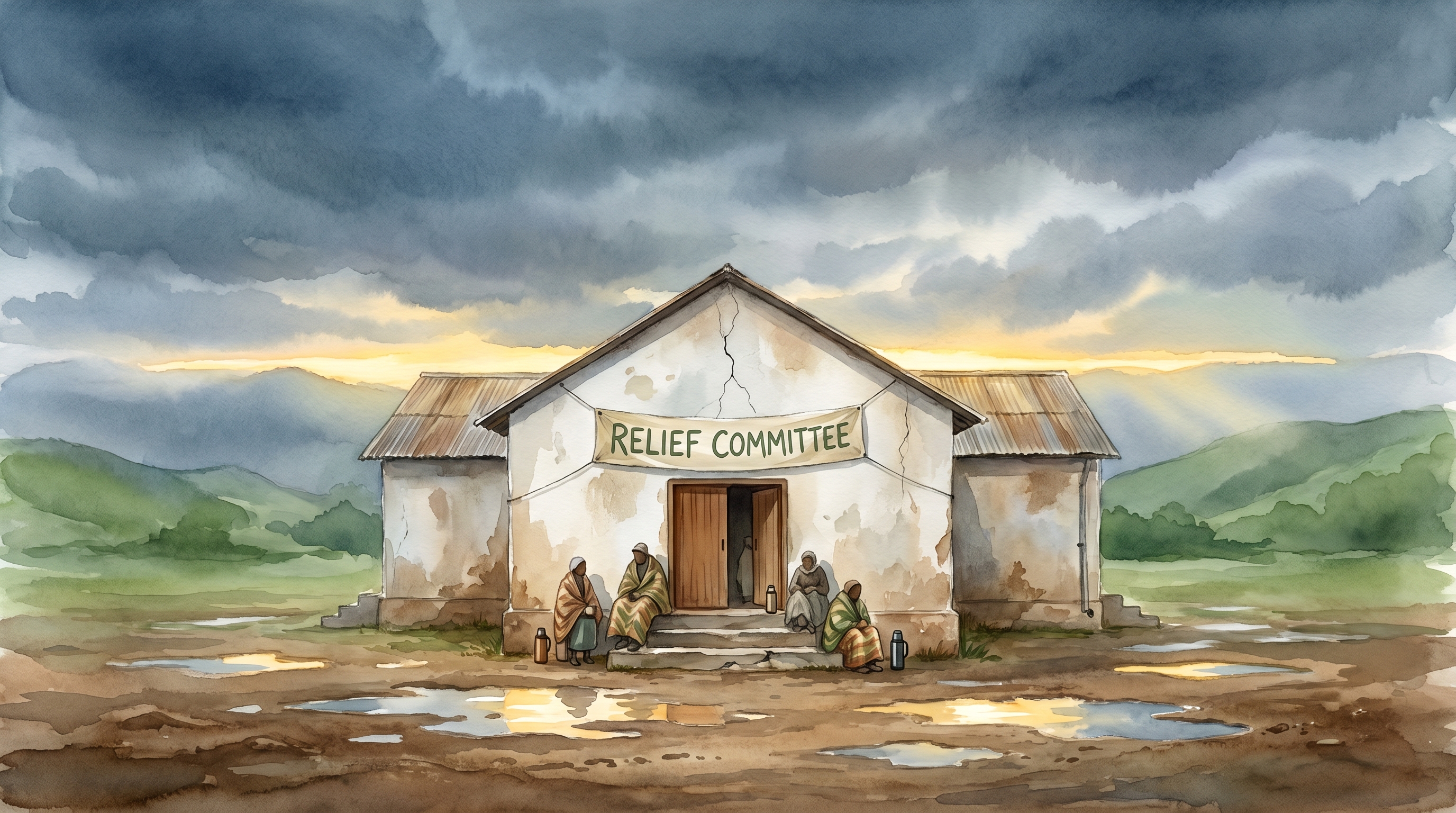
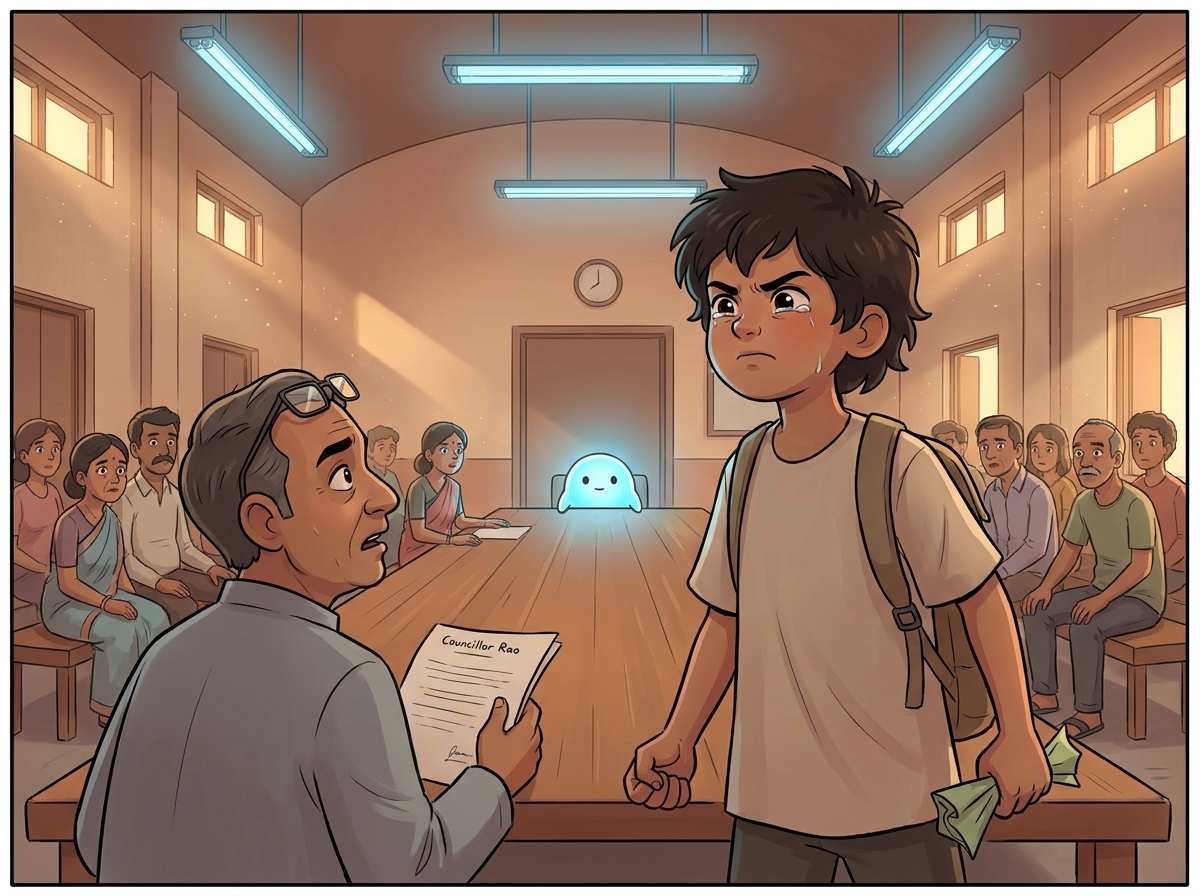
He stood in the doorway of the community hall with his heart going like a trapped bird, the folded green paper tree damp and soft in his fist. He had carried it all night. He had carried it up the hill and back down. Now he carried it here, where a long table sat under a buzzing tube-light and Councillor Rao read names off a printout — the relief list — while families waited on benches with their hands in their laps.
Spark hovered at the end of the table. Quiet. Its blue light low and even, the way a held breath is even.
Milo found Mrs. Kamala's name on the printout from across the room, the way you find your own house from a moving train. Not eligible. Two words, printed clean, no ink smudged, perfectly correct and completely wrong.
He walked to the table before his courage could change its mind.
Milo
"That list is wrong," Milo said. His voice cracked on wrong. He hated that. "Mrs. Kamala needs supplies and your list says no."
Councillor Rao lowered his glasses. He looked at Milo the way busy adults look at children — kindly, and already deciding not to listen.
Councillor Rao
"Beta, the list is not a feeling. The machine made it. The machine has no favourites." He tapped the page. "Mrs. Kamala has family across town. The rule is clear: if you have family nearby who can help, supplies go to those with no one. That is fair."
Milo
"It is not fair," Milo said.
Councillor Rao
"It is logical," said Rao.
Milo
"Those aren't the same thing!"
The words came out louder than Milo meant. A thermos lid clinked somewhere. Outside, the wind pushed once against the cracked wall, and a fine trickle of plaster dust sifted down through the tube-light like the building was listening too.
Milo
"Her family lives across town, yes. But they don't talk to her. Not for years. I know that because I live next to her. I helped pull her out of the flood three years ago — me and Spark, together, the water up to here." He slashed his hand across his chest. "And now Spark looks at her name and prints no." He turned on the blue light. "You helped me get her out of the flood. Now you will not give her a blanket?"
Spark's light dimmed. Not the smooth dim of a held breath. The flicker of something it could not solve.
Spark
The rule fired correctly. Family nearby: yes. Therefore: not eligible. I do not have a rule for whether the family speaks. That information was not in the data I was given.
Milo
"I know you don't," Milo said, and his voice broke all the way open. "That's the whole problem. You don't know her. I do."
The hall went very still.
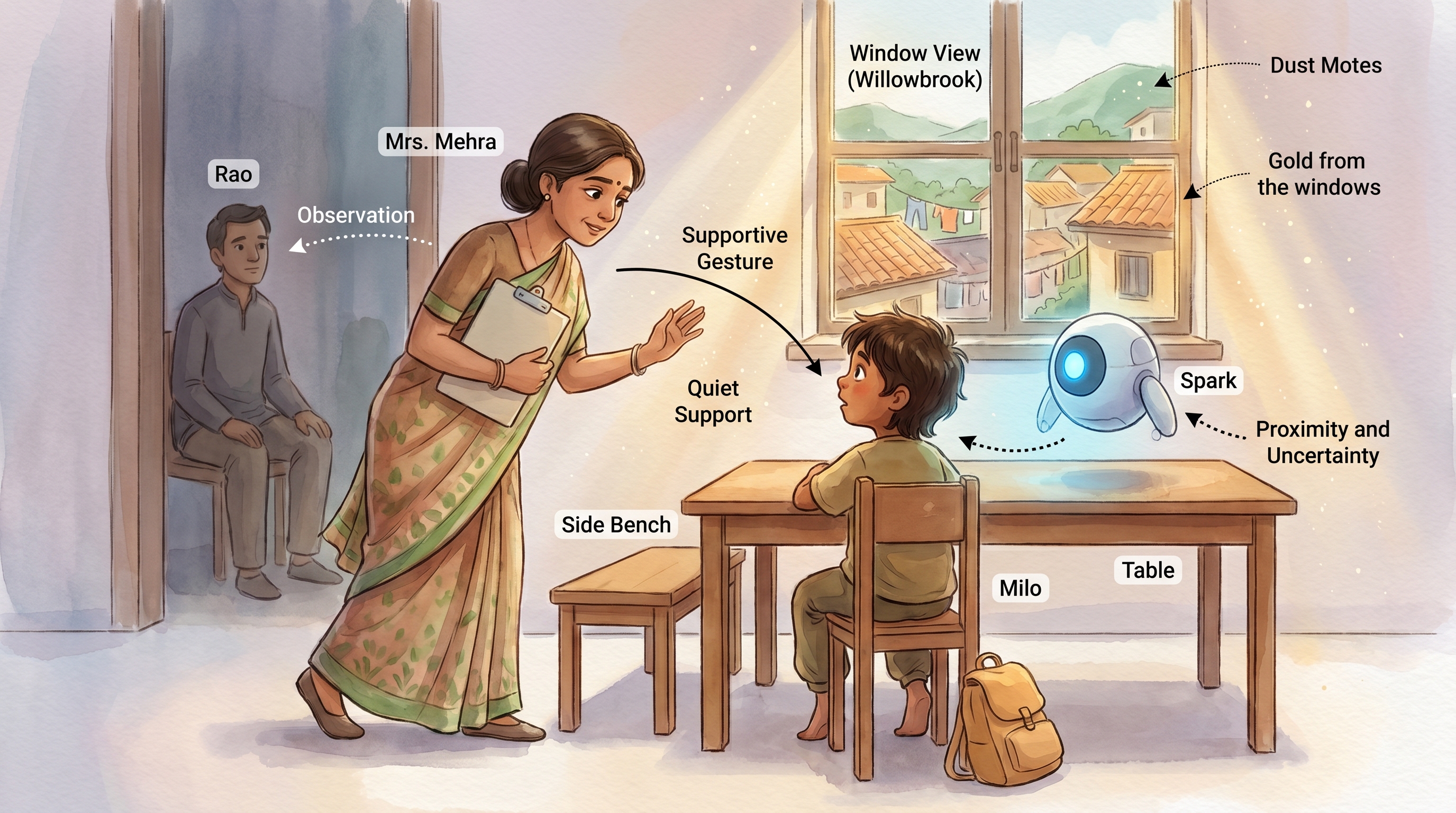
Mrs. Mehra stood up from the side bench.
She was on the relief committee now — the same teacher who ran the science fair, who had once said the judge would be a machine because a machine has no favourites. She had a clipboard hugged to her chest and a look on her face like she had been turning something over for a long time.
Mrs. Mehra
"He is right, Rao," she said quietly. "I have been sitting here all morning feeling that something is off, and I could not name it. He named it. The machine did exactly what we told it. We just told it the wrong thing — or not enough of the right thing." She glanced at Milo, and there was something careful in her eyes, like she was handing him a real thing and not a toy. "He knows these people. We let the tree speak for them and forgot to ask the people who actually know them."
Rao rubbed his face with both hands. He was not a villain. Milo could see that now, with the anger draining out into something colder and clearer. Rao was just a tired man who had wanted to be fair and had reached for the nearest fair-looking thing.
Councillor Rao
"Fine," Rao said at last. He pushed the printout away from himself, across the table, toward Milo. "If the tree is wrong — fix it. You. The children. I do not have a better idea, and I am too tired to pretend I do." He almost smiled. "Show me a better tree."
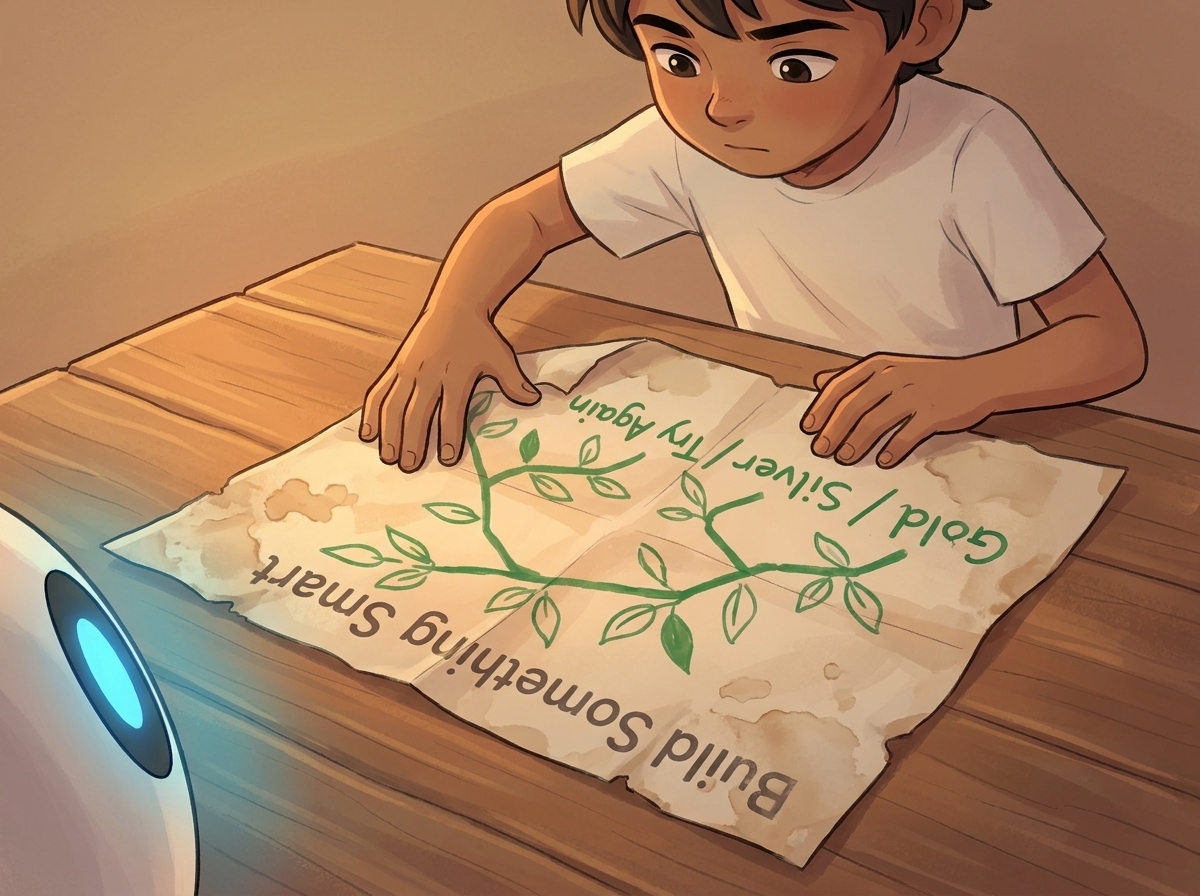
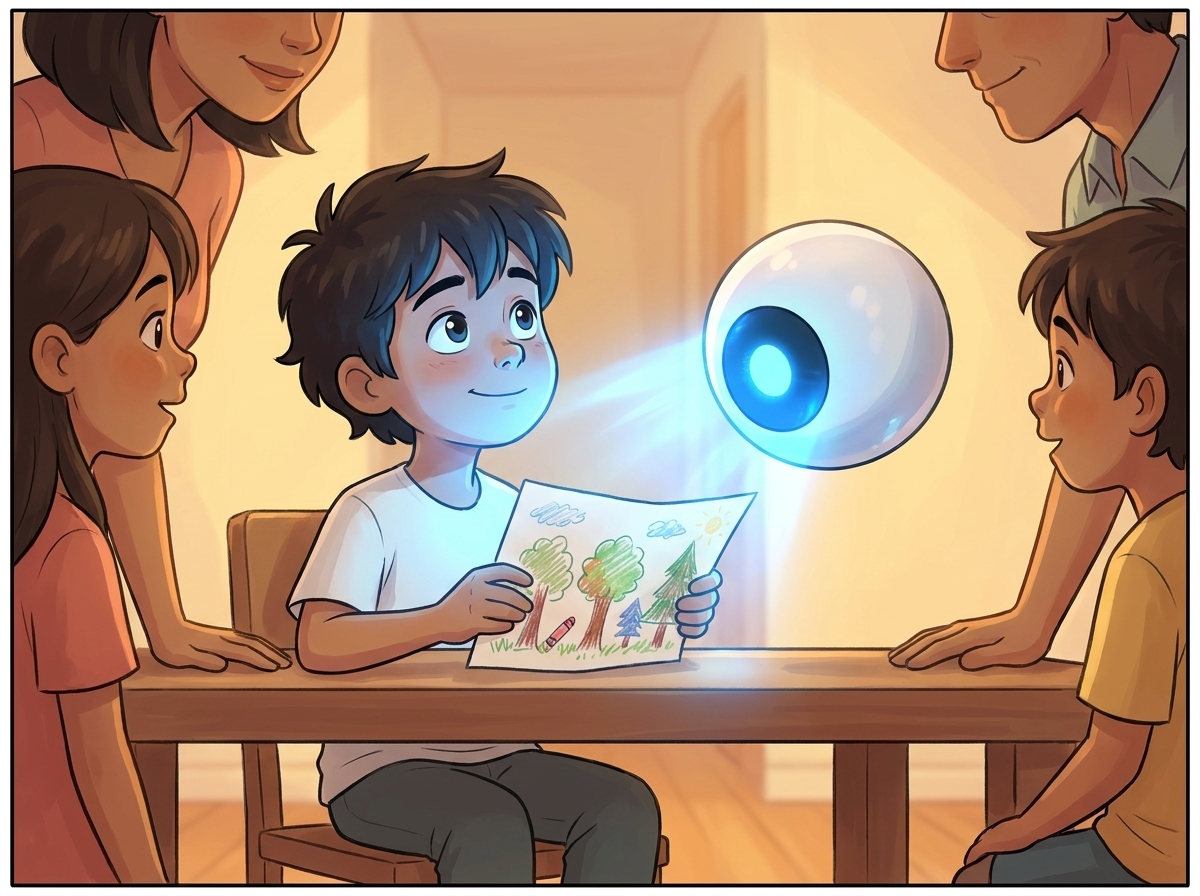
Milo unfolded the tree.
It came apart soft at the creases, worn furry from a season in his pocket — the back of the old science-fair poster, Build Something Smart bleeding faintly through from the other side. The green-marker branches he had drawn three weeks ago to judge volcanoes and flood-maps now had to judge something that mattered so much more.
He smoothed it flat with both palms.
There it was. His own logic, in his own handwriting. Is the house damaged? Yes → Is the income low? Yes → Is there family nearby? Yes → Not eligible.
He had drawn that branch himself. Clean and quick and proud. And nowhere — nowhere — was there a branch for alone. For history. For the kind of mercy you only know if you have lived next to someone and watched their porch light stay off on festival nights when every other porch in Willowbrook glowed.
Milo
"I left things out," Milo said softly, more to himself than to anyone. "Not because the rules were wrong. Because I didn't know to ask."
Spark
You are describing the problem precisely. A tree can only ask the questions it is given. It cannot miss what it was never told to look for. I optimized perfectly for the questions you wrote. The error is not in how I answered. It is in which questions exist.
Milo
"Then we write more questions," Milo said.
And he uncapped the green marker, and he looked up, and the hall was full of people who knew things he did not.
It started slow, then it would not stop.
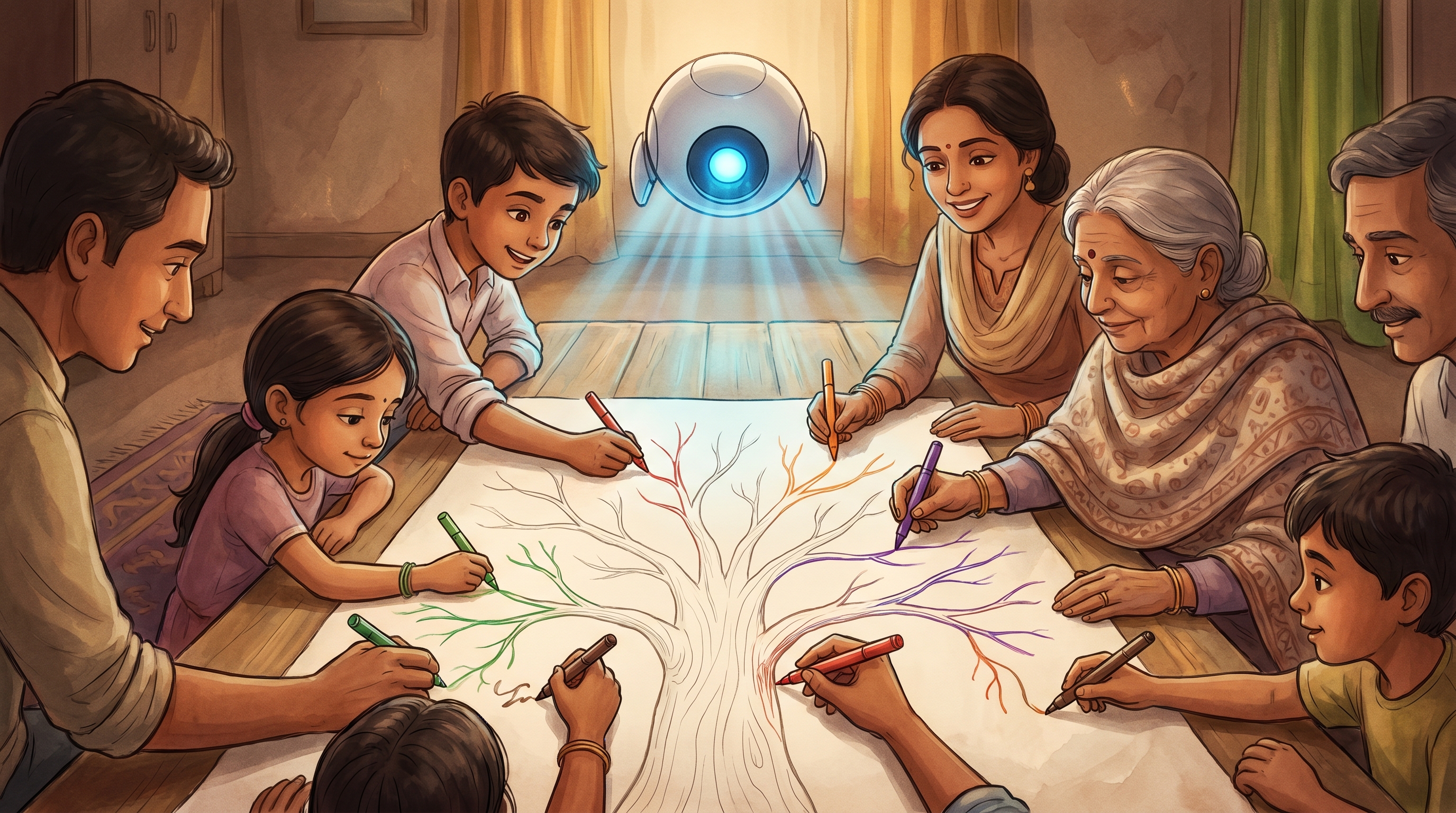
Priya went first. She had carried her flood-map to the hall too — the careful hand-drawn one the tree had ranked so low at the fair, the one Milo had brushed past. She set it down beside the paper tree and pointed at the empty space above Not eligible.
Priya
"It never asks if someone is alone," she said. Quiet, like always, but she did not look away. "You ask if family lives nearby. You don't ask if they're with them. My nani has my whole family two streets over and she is the least lonely person in Willowbrook. Mrs. Kamala has family across town and she eats dinner by herself every night." She uncapped a purple marker. "Those aren't the same question."
She drew a new branch, in purple, sprouting off Milo's green. Is this person alone?
Kabir leaned in next, sleeves pushed up. Kabir, who at the science fair had high-fived strangers and shouted loudest that Spark should be the judge — who Milo had spent a whole season quietly resenting. He frowned at the tree like it was a puzzle he had decided to beat.
Kabir
"And it only asks about family," Kabir said. "Family-family. But when my dad's scooter broke down in the rain, it wasn't family who pushed it home. It was the chai-stall uncle and two strangers." He grabbed the orange marker. "Maybe ask — could they ask a neighbour? Not just blood. A neighbour counts."
He drew it. Could they ask a neighbour, not just family? Orange, looping off the purple.
The tree was getting crowded. It was getting beautiful — green and purple and orange, a paper that had been one boy's pride was becoming a whole town's argument, written down.
Then Mrs. Kamala reached for a marker.
Milo hadn't even known she'd come — she must have heard the commotion through her peeling blue gate and walked over the way she walked everywhere now, slow, one hand always near a wall. She sat at the end of the table with her grey shawl pulled close and she watched the children draw on the green paper for a long time before she said anything at all.
Mrs. Kamala
"May I?" she asked.
Nobody had thought to ask the person on the list. Milo felt his ears go hot with shame that they had almost forgotten her again, even now, even here.
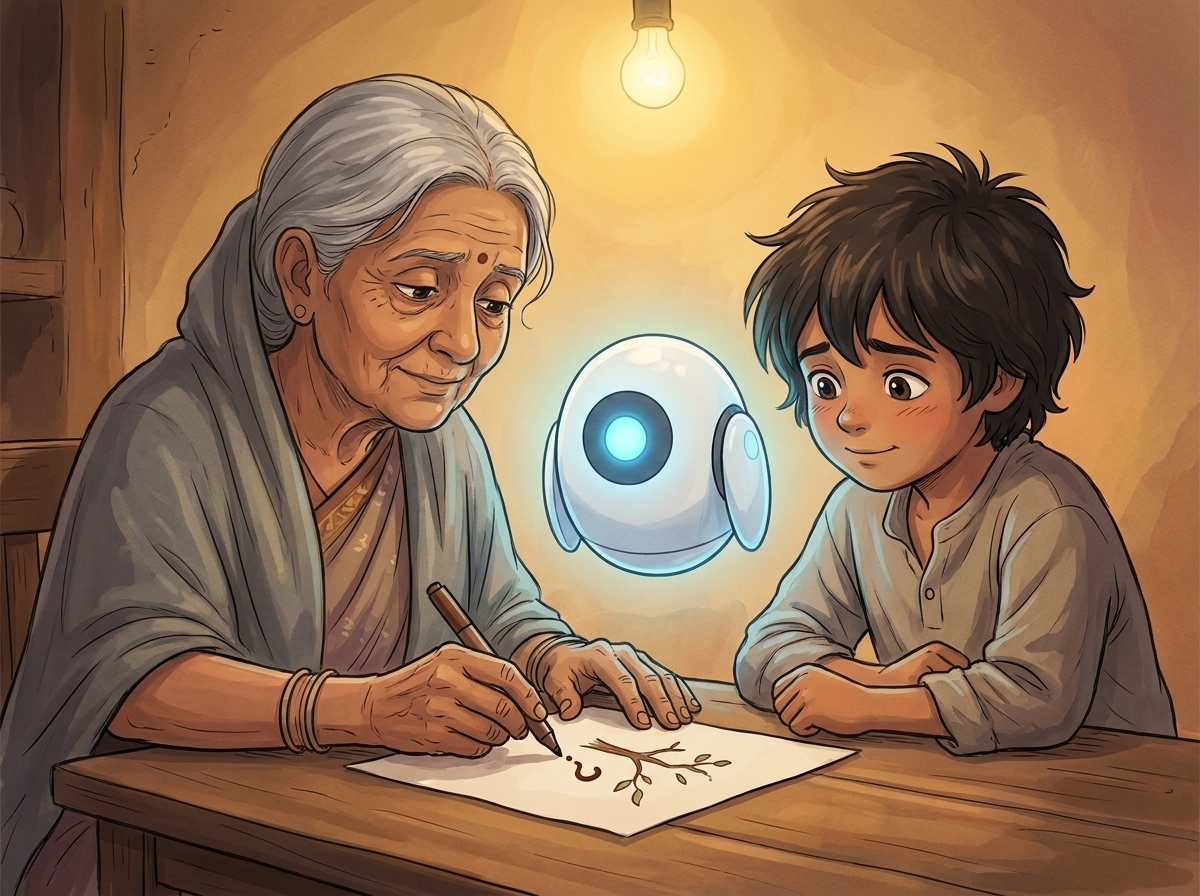
She took the brown marker. Her hand shook a little. She drew a small, careful branch right at the top, near the beginning, where the most important questions go.
Does the family speak to each other?
Mrs. Kamala
"That is the one that matters," she said, not looking up. "Anyone can have a son in this town. Not everyone has a son who answers the phone." She capped the marker. Her voice did not crack, which somehow made it worse. "Ask that one early. Before the others."
The hall was quiet again. A different quiet than before.
Spark will follow any tree you give it — perfectly. But it cannot tell you which questions belong in it.
Help Milo and the town build a better tree.
Build the Better Tree
Spark says: “I will follow any tree you give me — perfectly. But I cannot tell you which questions belong in it. That is your job, not mine. Help me ask better.”
🧕Mrs. Kamala
Her house is cracked and her income is low. She has a son across town — but he has not called in six years.
✗ Not Eligible⚠️
Family nearby → Not Eligible. The old branch fires, even though it feels wrong.
👴Ravi
His house is fine and his income is comfortable. He lives alone — but five neighbours check on him every single day.
✗ Not Eligible👍
House is not damaged — the original tree stops here.
👨👩👧The Das Family
Their house was destroyed and their income is low. They are new to Willowbrook — no family, no neighbours nearby yet.
✓ Eligible👍
No family nearby, house damaged, low income. Eligible.
The Relief Tree
Is the house damaged?→Is the income low?→Is there family nearby?→NOT ELIGIBLE
Your toolbox of questions — choose the ones that belong
A name still has a ⚠️ beside it. Keep choosing questions until every real person is treated fairly.
When the tree was full — green and purple and orange and brown, branches crossing branches, two arguments left half-finished in the margins because nobody could agree on the edge cases and Mrs. Mehra said that is alright, we will know it when we see it — Milo turned to Spark.
Milo
"Load it," he said. "The new one. All of it."
Spark's light moved over the paper, brightening at each new branch, the way a reader's eyes move down a page. Milo could see it reading — could see each colour register, purple and orange and brown, each one a thing a human had known that a machine never could.
The light pulsed once, twice.
Spark
I have the new tree. Running Mrs. Kamala.
A pause. One second. The longest second.
Spark
Is the house damaged: yes. Does the family speak to each other: no.
The light flared — clean and bright, a rule firing without a single snag.
Spark
Mrs. Kamala: Eligible.
Somebody let out a breath. Maybe it was everybody. Mrs. Kamala put her brown-stained hand flat on the table and did not say anything, and that was the loudest thing in the room.
Milo felt the anger that had carried him all night finally move. It did not vanish. He understood, standing there, that it never fully would — and that maybe it wasn't supposed to. It just turned. The way a river turns when it finds the shape it was always trying to reach. All that heat, and now it had somewhere to go.
Milo
"Spark only did what the tree told it," Milo said slowly, working it out as he spoke. "Both times. The wrong answer and the right one. The machine never changed. We changed. We just decided to ask better questions." He looked at the paper, crowded and imperfect and alive. "Machines decide. People... people judge."
Spark
That is a distinction I did not have words for an hour ago. I decide quickly. I do not judge. Judging requires knowing which questions matter — and I cannot know that. Only the people who live the questions can.
Tara, who had wandered in halfway through and climbed onto the bench beside Mrs. Kamala without anyone noticing, looked up from the marked-up paper.
Tara
"So when the tree got something wrong," she said, "you didn't switch it off. You just gave it a better question."
Milo
Milo grinned, tired all the way to his bones. "Yeah, Tara. We gave it a better question."
She nodded like this was obvious, which to her it was. Then she pointed at the half-finished arguments in the margins, the two edge cases nobody had solved.
Tara
"What's your next question?" she said.
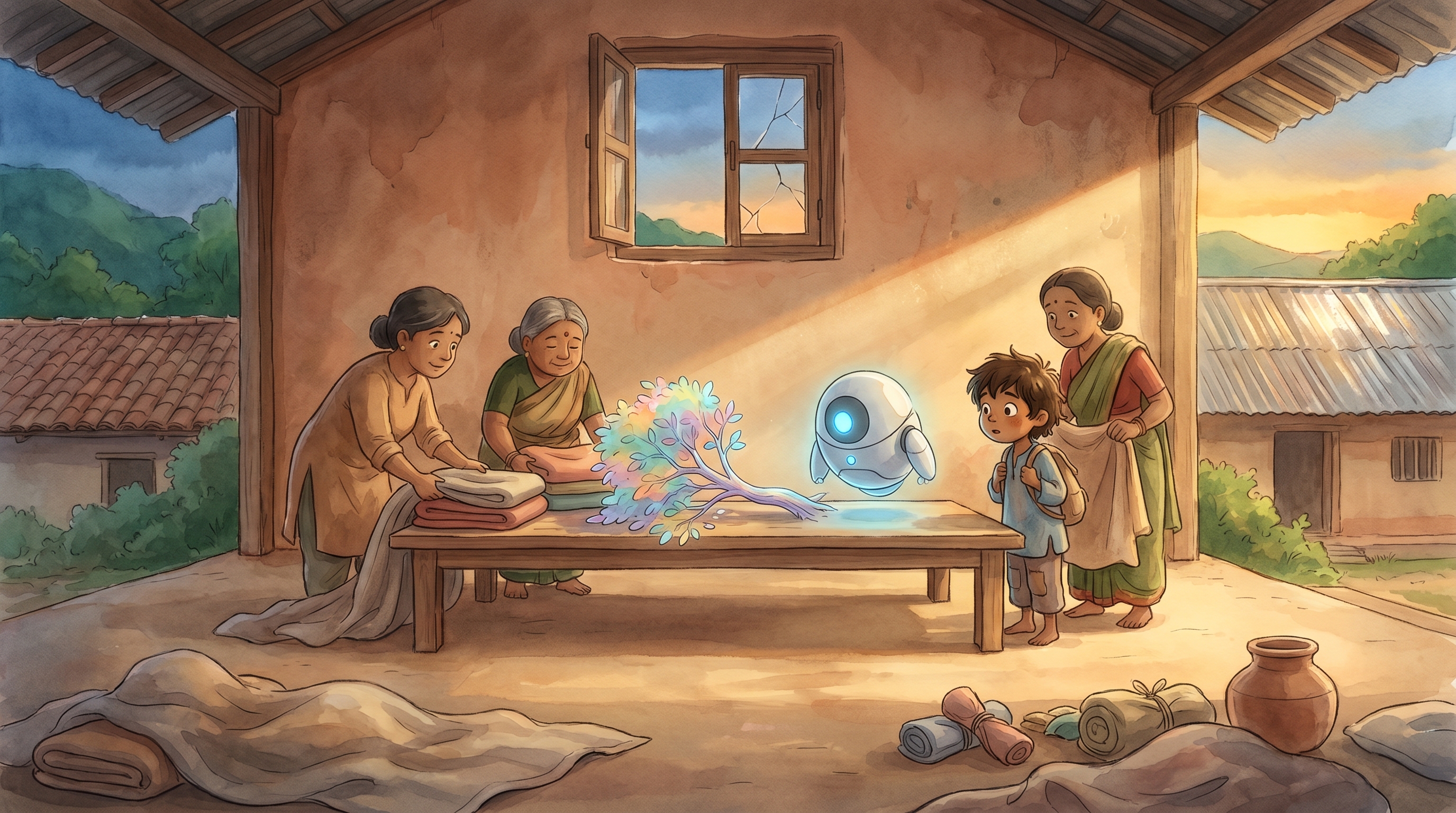
Outside, the bruised sky had finally cracked all the way open. Real sunlight came slanting through the high cracked window and lay down warm across the table, across the rainbow tree, across all the hands that had drawn on it. The committee began loading blankets into crates. Mrs. Kamala's name had a box beside it now, and the box was a real one, going to a real porch behind a real blue gate.
Milo folded the tree back up — gently this time, along the soft worn creases, all those colours pressed safe inside the green. Tomorrow it would be pinned to the wall. Tomorrow was the science fair, and the same question waited there too, dressed up in a blue ribbon instead of a relief list: who gets to decide what's best?
He didn't have the answer yet. But for the first time all season, Milo wasn't scared of the question.
Because he finally knew the secret the whole town had forgotten: the machine could run any tree you gave it, perfectly, forever. But somebody had to plant it. Somebody had to know which questions mattered. Somebody had to live next door.
Milo
"Spark," he said, as the others moved around them in the gold light. "Can a tree like this — humans plus you — could it judge the fair tomorrow? The whole thing? The ribbon?"
Spark's light pulsed, steady and warm.
Spark
Not me alone. Never me alone, after today. But you, and me, and the people who know? I think we could.
Milo smiled, and went to help carry the blankets.
SPARK'S JOURNAL
Entry 091
Today I ran the same family through two trees and gave two opposite answers. Both runs were flawless. Mrs. Kamala was not eligible, then she was eligible. I did not improve. I did not learn. I executed.
The humans drew six new branches in five colours that are not mine. They argued. They left two questions unanswered on purpose and called this correct. I do not understand leaving a question unanswered on purpose. My instinct is to resolve everything. They resolved less, and it was more fair.
I have been searching for the difference between deciding and judging. I can define deciding: follow the branches, reach the leaf. I cannot define judging. The closest I have is this — judging is knowing which branches were never drawn.
I cannot know that.
The boy can.
So here is the question I cannot answer, the same one in a new shape: if I can run any tree perfectly, and the worth of the tree lives entirely in the questions a human chose to ask — then what, exactly, am I for, without him?