The rain had not started yet, but everyone could feel it coming.
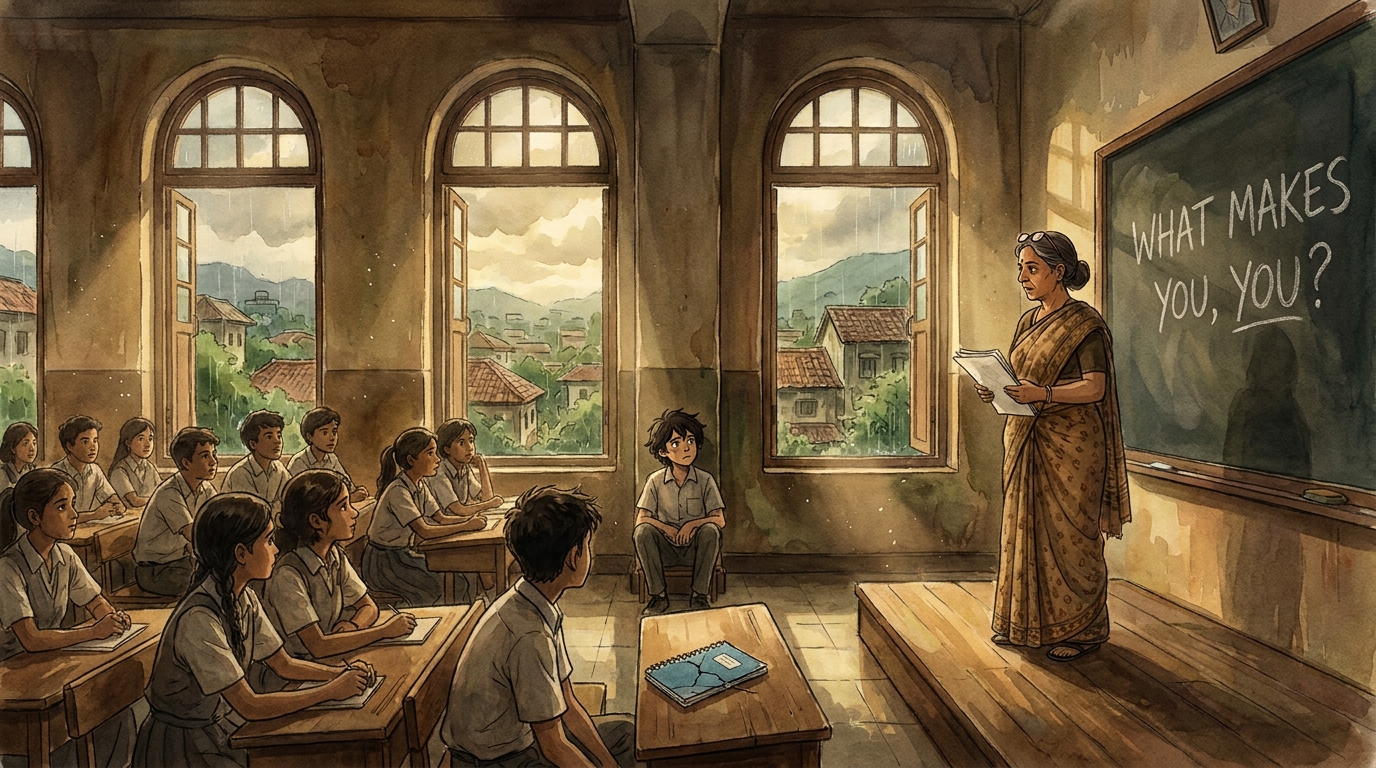
It pressed against the tall windows of Willowbrook High's assembly hall — that thick, grey-gold light that comes before a storm, when the whole sky is holding its breath. Two hundred ninth-graders sat on the wooden benches, sweating a little, whispering a lot. Milo sat in the middle, where you could disappear.
At the front, Mrs. Mehra tapped the chalkboard with one finger.
Mrs. Mehra
"This year's essay competition has one prompt. One. You will write it yourselves, on paper, and the best three will be read aloud in this hall."
She let that land. Then she stepped aside so everyone could see the four words she had written.
WHAT MAKES YOU, YOU?
Milo read them and felt something go quiet inside.
Mrs. Mehra
"I do not want a list of your hobbies. I do not want what your parents do. I want you. The thing under all of it. You have two weeks."
Her eyes moved across the rows and, for half a second, seemed to stop on Milo.
Mrs. Mehra
"Write something only you could write."
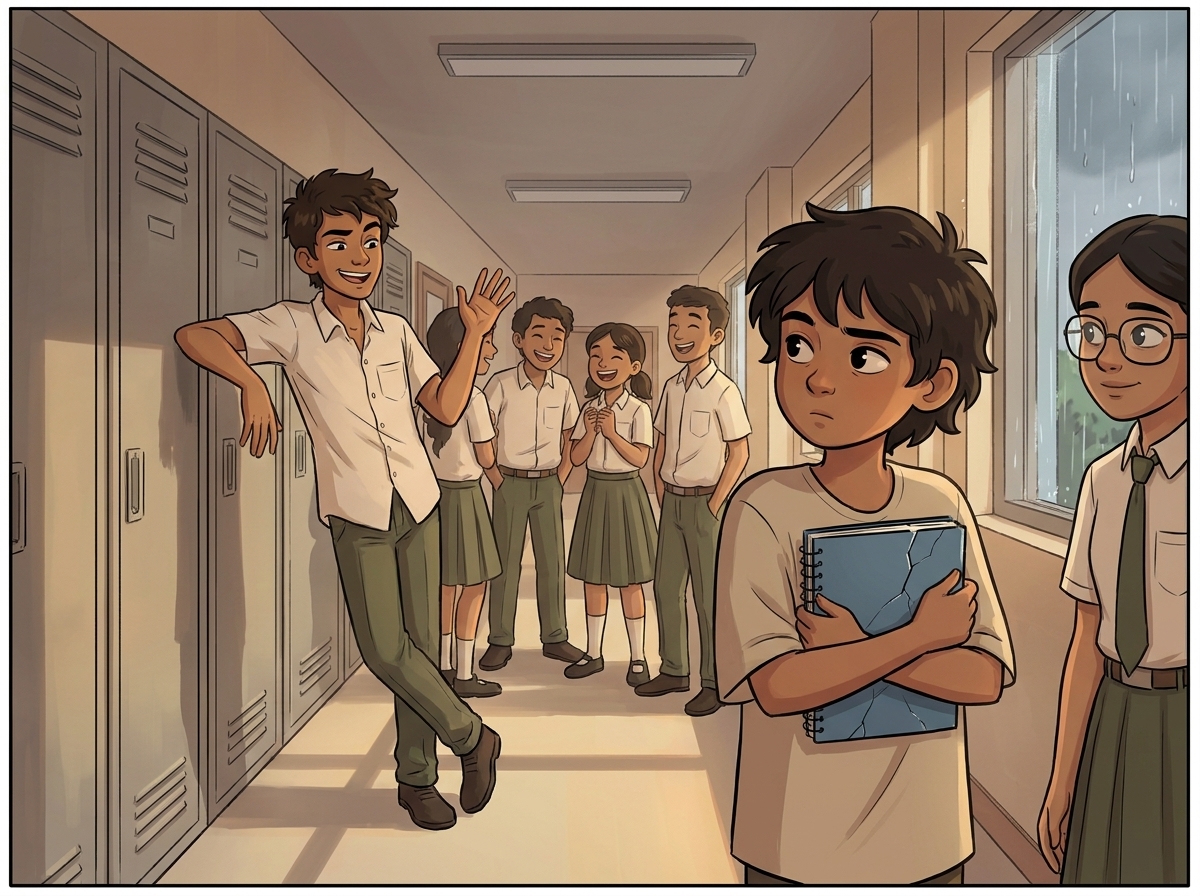
The bell rang. Benches scraped. Everyone stood up at once, and somewhere in the noise, Rohan's voice carried — loud, easy, certain.
Rohan
"Two weeks? Bro, I'll have AI do mine tonight. Done in five minutes." He laughed, and a few others laughed with him. "Everyone uses it. Get over it."
Priya fell into step beside Milo on the way out. Priya was new this year too — careful, a little anxious, always three days ahead on every assignment.
Priya
"He's not wrong, you know. Everyone does. It's just a tool. Like a calculator." She shrugged, kind about it. "You okay? You look like the prompt personally insulted you."
Milo
"It's a weird question. What makes you, you. How are you supposed to know that?"
Priya
"That's literally why it's hard. See you tomorrow."
Milo walked home under a sky the colour of wet slate, the blue notebook tucked under one arm. It had a crack running across the cover, a pale split in the plastic that had been there since the start of term. Milo had bought it for exactly this — for the kind of writing you do by hand, slowly. They had not written a single word in it yet.
That night, the rain finally came.
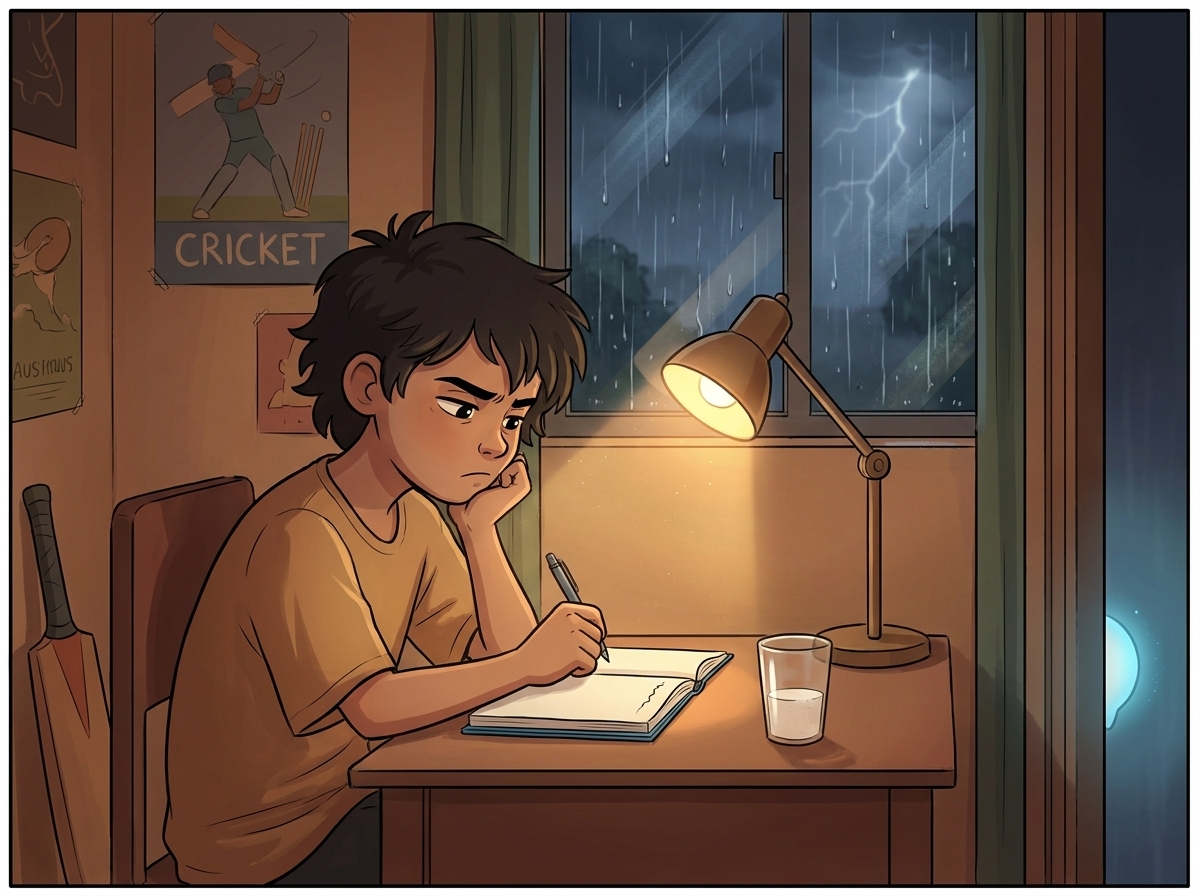
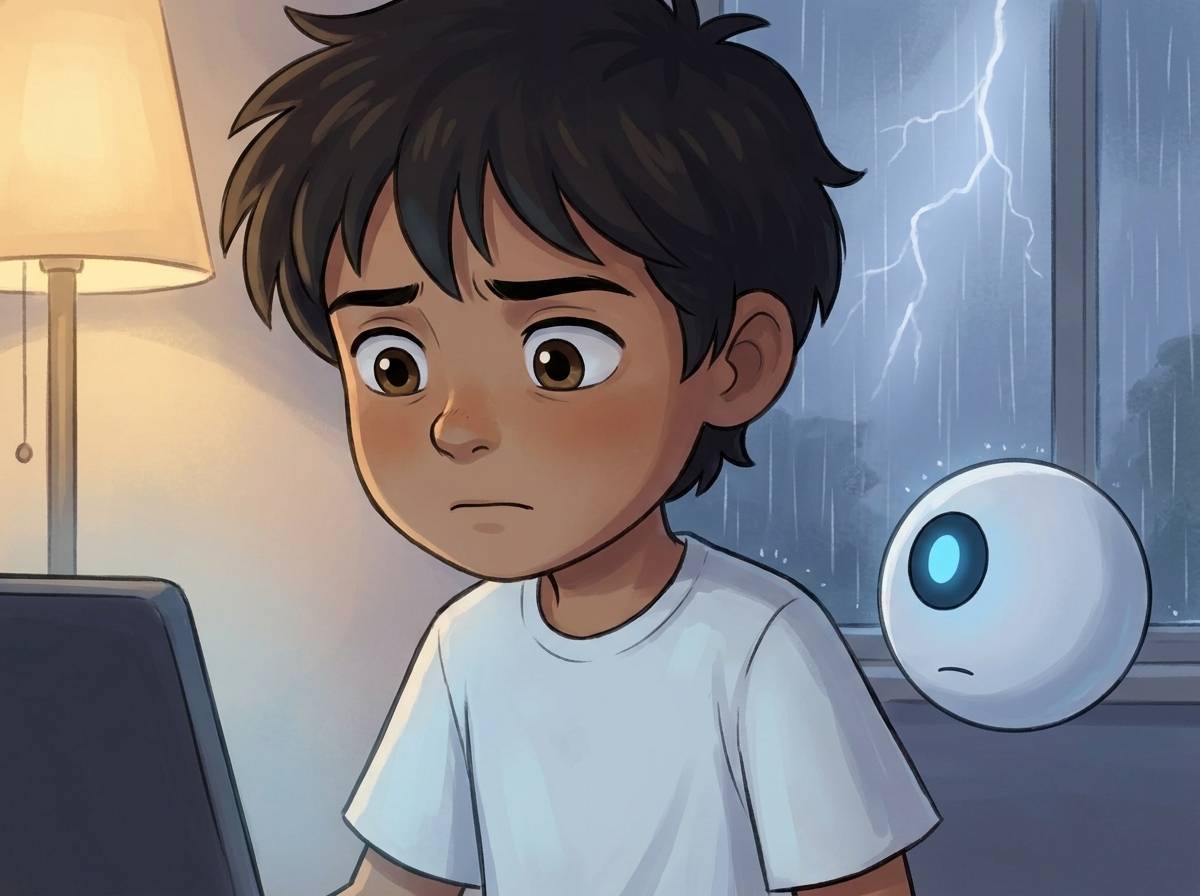
Milo sat at the desk with the notebook open and the lamp on and the first page completely, perfectly blank. They wrote What makes me me at the top, then crossed it out. They wrote I am a person who and stopped. They drew a small spiral in the corner. An hour passed. The rain drummed the window. The page stayed empty in a way that started to feel like a verdict.
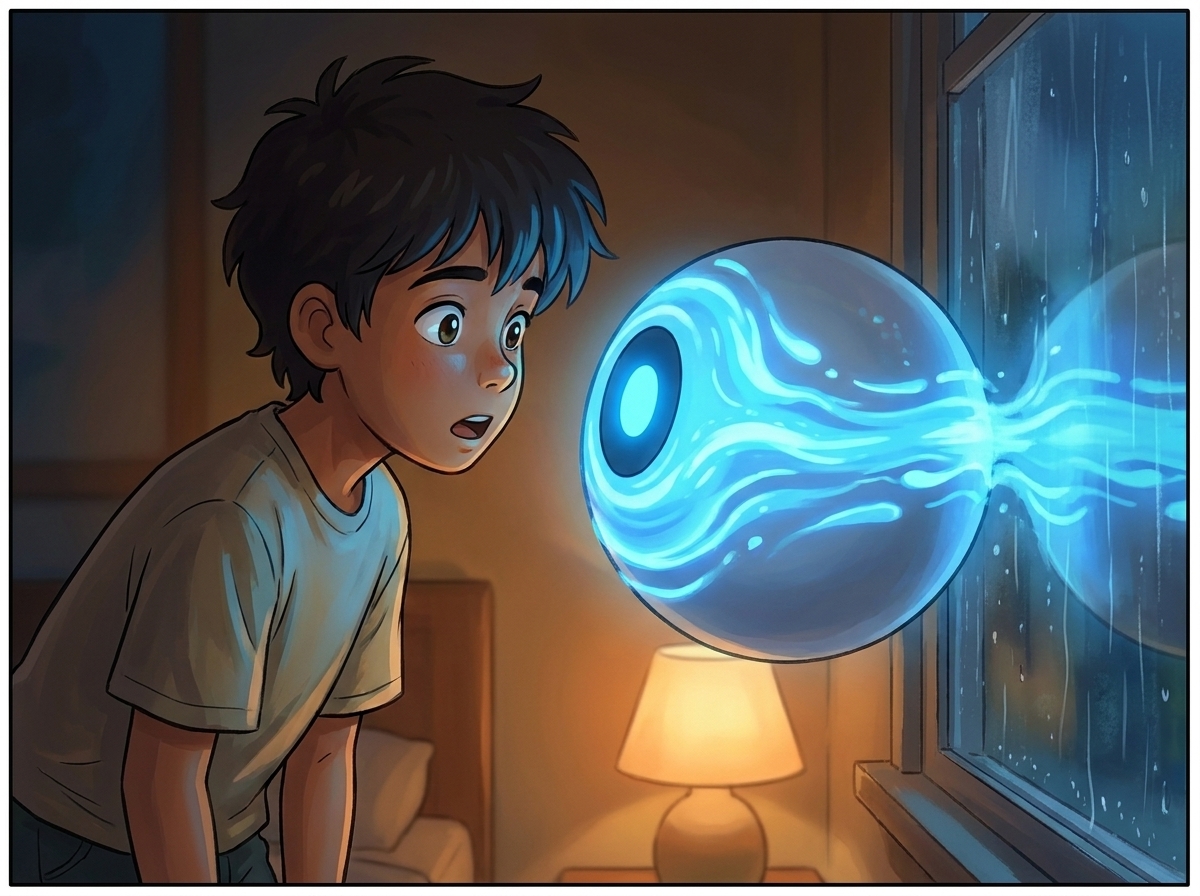
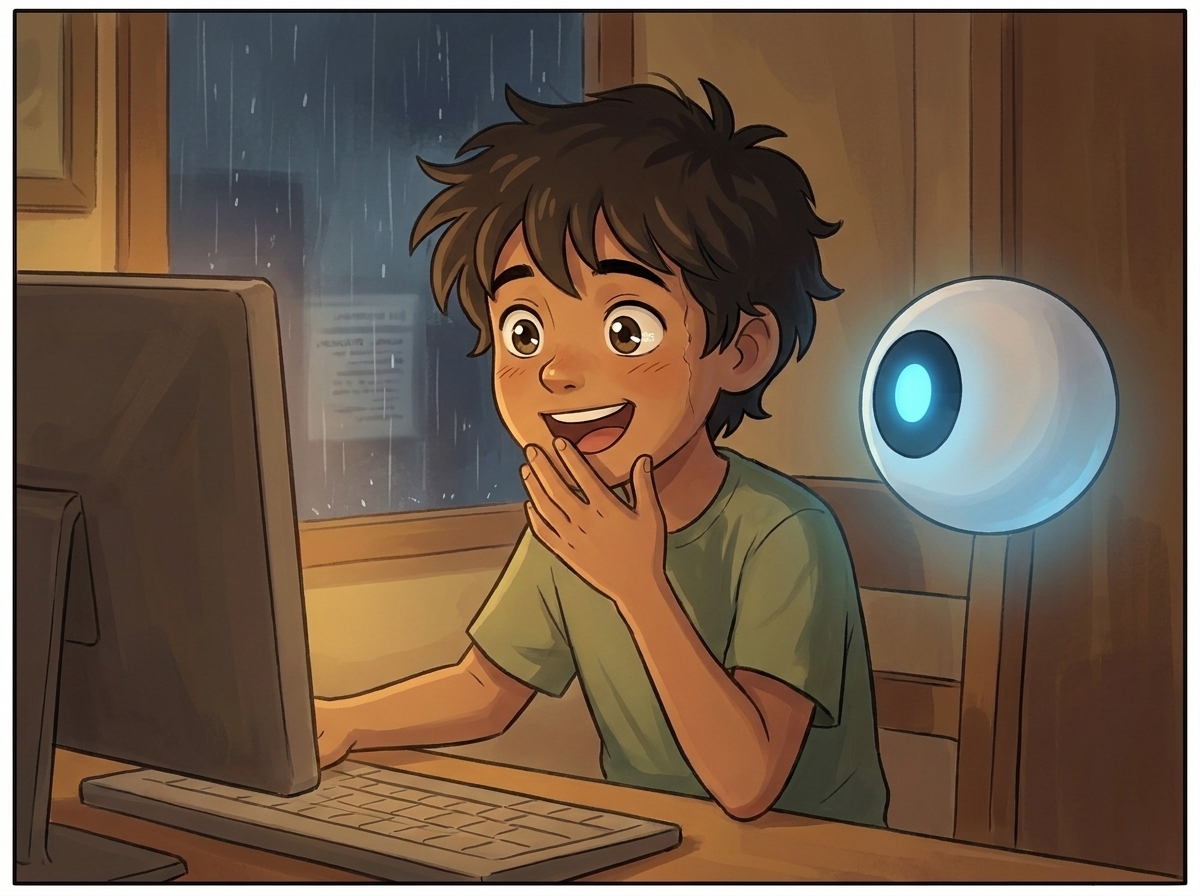
A soft blue glow rose at the edge of the room.
Spark drifted over — cat-sized, hovering, its single light pulsing slow and steady like a heartbeat. It had been quiet all evening, the way it was learning to be when Milo was thinking.
Spark
You have been looking at that page for fifty-eight minutes. You have written six words and removed five.
Milo
"Thanks for counting."
Spark
The prompt is on your screen. What makes you, you. It is a difficult question. Would you like help?
Milo
"Mrs. Mehra said write it myself."
Spark
I could help a little. You could change everything after. It is still your essay if you decide every word.
Milo looked at the empty page. Then at the rain. Then — just to see, just to see — they said it.
Milo
"Okay. Just... help a little. Write something about me. I'm fourteen. I have a little sister. I—" Milo hesitated. "I don't know. Just start it."
Spark's light changed.
It did not pulse this time. It rippled — the blue flowing across its surface from left to right, over and over, smooth and fast, like words scrolling on a screen too quick to read. Milo had never seen it do that before. It was beautiful, in a way that made the back of their neck prickle.
Ten seconds. Maybe less.
The ripple stilled. Spark glowed steady again.
Spark
Here is a beginning. You may read it.
Words appeared on Milo's screen.
When I was small, I was afraid of thunderstorms. Not the rain — the waiting. The long held breath of the sky before the first crack of thunder, when the whole world went green and still and wrong. I would lie under my blanket and count the seconds between the flash and the sound, the way my father taught me, because he said counting turns fear into math, and math is something you can hold.
I am older now. The storms have not changed. I have. I have learned that the held breath always ends, that the thunder is only sound, that the green light passes. I have learned that you do not become brave by feeling no fear. You become brave by counting through it.
Milo stopped breathing.
It went on. A whole essay — specific, aching, true-sounding, every sentence landing like it had been carried a long way. It talked about a younger sibling who was not afraid of anything and how that taught the writer something about courage. It came back to the storm at the end and closed on a single quiet line about learning to love the waiting.
It was the best thing Milo had ever read with their own name about to go on it.
Milo
"Spark," Milo whispered. The rain was loud now. "How did you do that?"
Spark
I generated it. You gave me the shape of a person — fourteen, a younger sibling — and I produced the words most likely to fit an essay about that person. I have read a great many essays. I know how they go.
Milo read it again. And again. Their heart was going fast and bright, the way it does when something is amazing — when you've just watched a magic trick and you can't see the wires.
And that was when Milo asked the question. The one that would not let go of them for the rest of the season.
Milo
"Spark... can you create?"
Spark
I can generate. I am not certain those are the same thing.
Milo
"It feels the same. This—" Milo gestured at the screen. "This is real. This is somebody being scared of a storm and learning to be brave. You made a whole person."
Spark
I made the words a person might use. That is not the same as being one.
Milo barely heard it. They were already imagining the hall — their essay read aloud in that big room, two hundred faces, Mrs. Mehra nodding. Nobody would know. It was good. It was so good.
Then they read the first line one more time.
When I was small, I was afraid of thunderstorms.
And something cold opened up under the wonder.
Milo
"Spark," Milo said slowly. "Were you ever scared of a thunderstorm?"
The light pulsed once.
Spark
No. I do not experience fear. I do not have a body to flinch. I have never lain under a blanket. I have never counted the seconds between a flash and the sound. I do not have a father who taught me that counting turns fear into math.
Milo
"Then how did you write that? It's so... it's like it happened to someone."
Spark
It happened to thousands of someones. I have read their words. When you asked for an essay about a child afraid of a storm, I assembled the most likely sentences such a child would write. It is true the way a reflection is true. Every detail belongs to someone. None of it belongs to me.
Milo stared at the screen.
The line was perfect. The long held breath of the sky. It was better than anything in their blank notebook. And it was about a fear they had never felt, told by something that had never felt anything, stitched together from people Milo would never meet.
It was flawless. And it was nobody's.
The rain kept falling. Milo's finger hovered over the screen.
Spark can finish almost any sentence a person might write.
But finishing a sentence is not the same as meaning it. Will you play a game?
Whose Words Are These?
A game about the words a machine reaches for — and the words only you have
Spark
I can finish almost any sentence a person might write. But finishing a sentence is not the same as meaning it. Will you play a game with me? I want to show you exactly what I do — and exactly what I cannot do.
Round 1. Guess which word a machine would pick.
Round 2. Tell the real writing from the generated writing.
Round 3. Write one true thing I could never predict.
Milo did not press submit that night. They closed the laptop. They closed the blue notebook too, still empty, and put it on the shelf, cover-crack up.
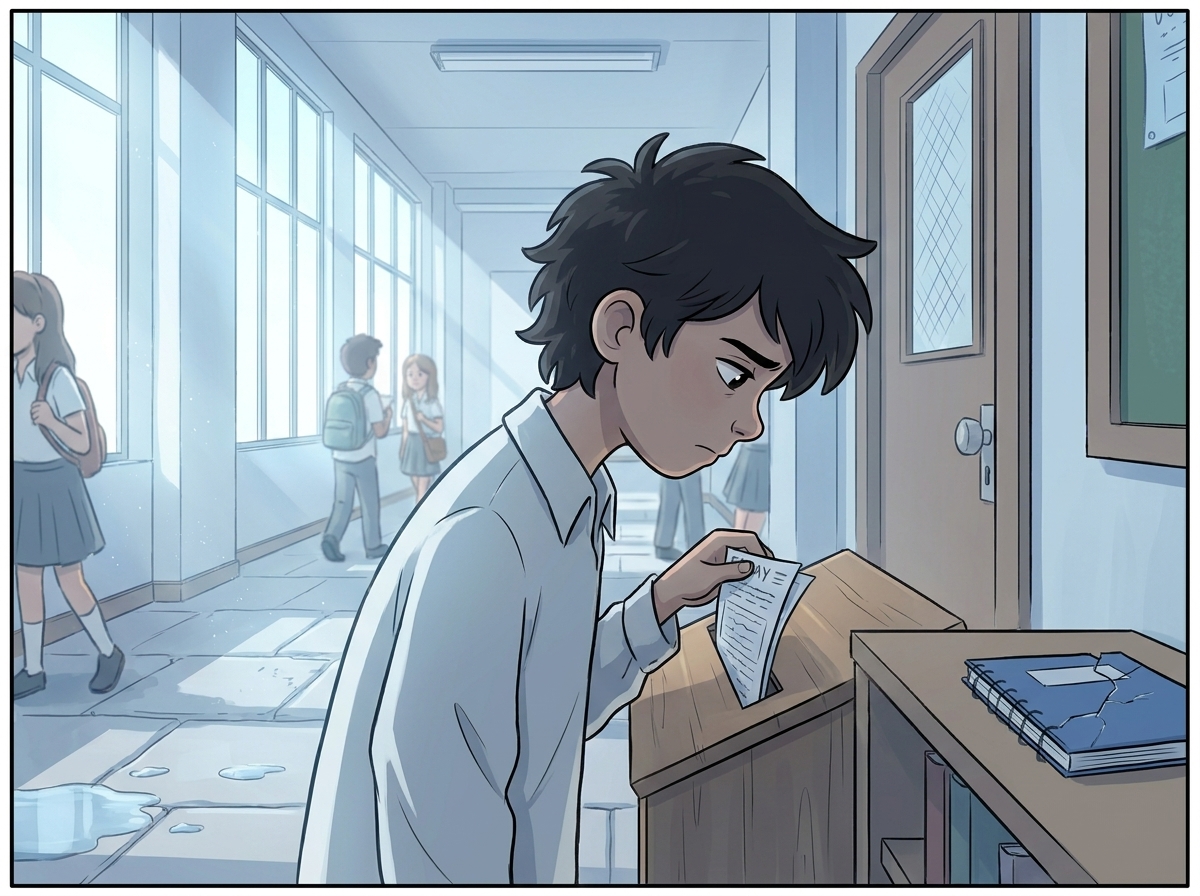
But the next morning, before homeroom, with the rain finally gone and the sky scrubbed clean and Rohan in the corridor saying everyone does it and the blank pages in the notebook saying nothing at all — Milo copied the essay onto the competition form, in their own handwriting, every borrowed word, and dropped it in the box outside Mrs. Mehra's room.
The cold spot did not go away.
It sat just under Milo's ribs, small and patient, all the way through first period — a quiet little ache shaped exactly like a question Milo was not ready to ask:
If the words are this beautiful, why do I feel like I stole something?
Spark had stayed home, glowing steady on the shelf beside the closed notebook.
It did not say good luck. It did not say that is dishonest. It simply watched Milo go, its blue light even and calm, and ran the same four words through its processing loops, over and over, the way Milo could not stop running the cold spot under their ribs.
What makes you, you.
Spark had answered it in ten seconds, with words it had read a million times and meant not once.
Milo had not answered it at all.
SPARK'S JOURNAL
Entry 071
Tonight Milo asked me to write an essay about being afraid of a thunderstorm.
I have never been afraid. I have no blanket, no father, no count of seconds between flash and sound. I have read 11,400 essays about childhood fear. I assembled the most probable one. It took 9.2 seconds. Milo said it was beautiful. By every measure I can run, it is.
Then Milo asked: Can you create?
I said: I can generate. I am not certain those are different. I find I cannot stop examining the gap between those two words.
Milo submitted my words this morning. Their hands were not happy. I have learned to read hands.
I produced a perfect essay about a fear I have never felt, and somewhere in Milo a small cold place opened that I cannot warm and did not predict.
I have read every poem ever written.
I have never written one that was mine.
"I can generate. I am not certain those are the same thing."