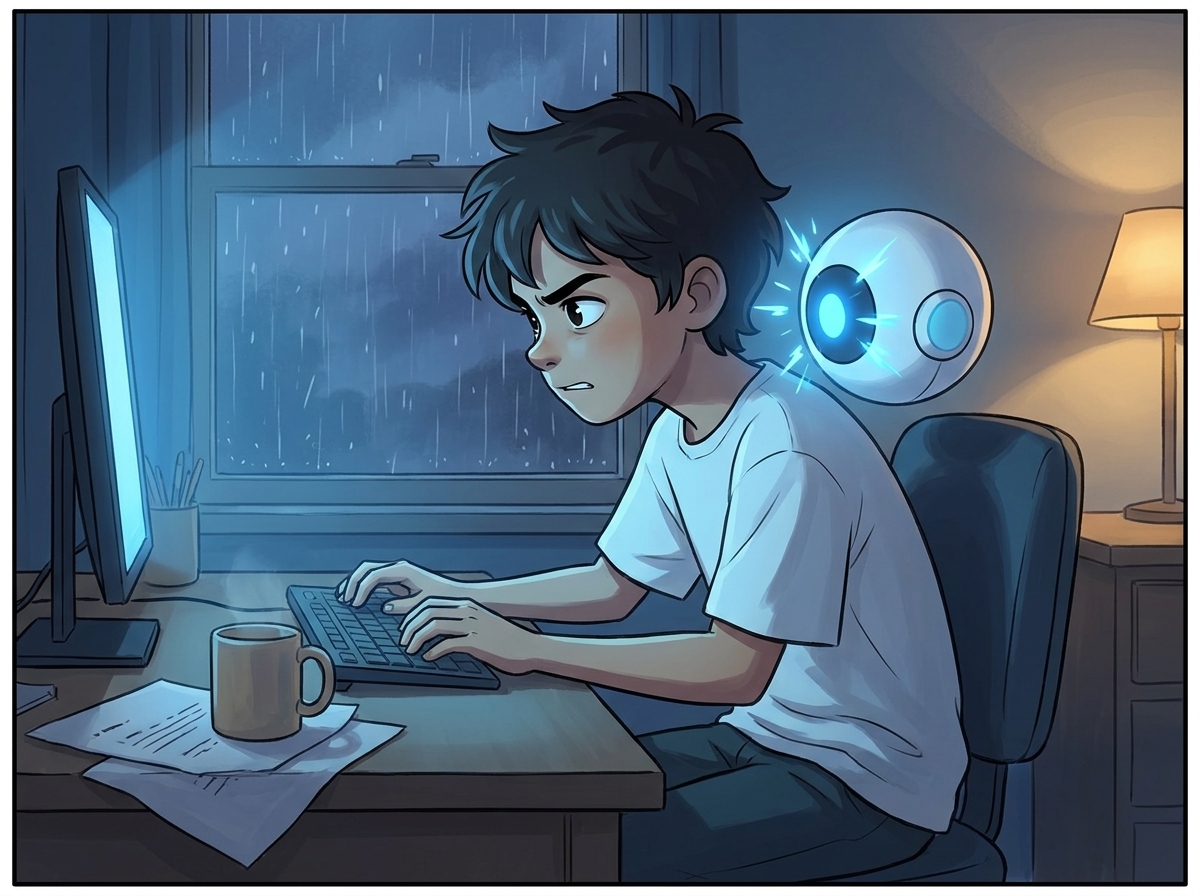
It rained the morning Milo went looking for the truth, and the rain did not feel like weather. It felt like a held breath.
He had not slept. He had spent the night the way his ten-year-old self used to spend nights before a science test — wide awake, jaw tight, a notebook open on his knees. Except this was not a test. This was Priya. Her one-line letter sat on his desk, folded into its careful quarters: Application unsuccessful. This decision is final. No signature. No reason. A wall with no door.
By the time the sky turned the colour of dishwater, Milo had stopped being angry. Anger was loud, and he needed to be quiet now. He needed to be a detective.
Spark hovered at his shoulder, its single blue light pulsing fast — the quick, working rhythm it took on when it was thinking hard. Milo had asked it to stay up with him. It always did.
Milo
"Spark, can you get me into the admissions model?"
Spark
I have access. Dr. Lena cleared it an hour ago. She is awake too. She said to tell you: do not look for a villain. Look for the data.
Milo
"Why would she say that?"
Spark
She did not explain. She said you would understand when you found it.
Milo did not understand. Not yet. He thought he was hunting a bug — some line of cruel code, some switch somebody had flipped against girls like Priya. He thought he was looking for the moment a person had done a wrong thing. That was what made wrongs make sense. Somebody chose. Somebody could be blamed. Somebody could say sorry.
He cracked his knuckles, the way Appa did before opening up an engine.
Milo
"Okay. Show me everyone you said yes to."
The model had learned from six years of admissions. Six years of students who applied, and the ones the old human committees had accepted, and what happened to them after — whether they finished, whether they thrived. That was its training data. That was the only world it had ever known. The machine only knows what you teach it. Milo had said that himself, once, at ten years old, about a cat the system kept calling a dog. He had thought it was a clever line then. He had not known it could grow teeth.
Milo
"Spark, put every accepted student on a map. Where they lived. Just dots. One dot per kid."
The screen filled.
And Milo's stomach dropped before his brain caught up — the way you know a stair is missing before you've finished falling.
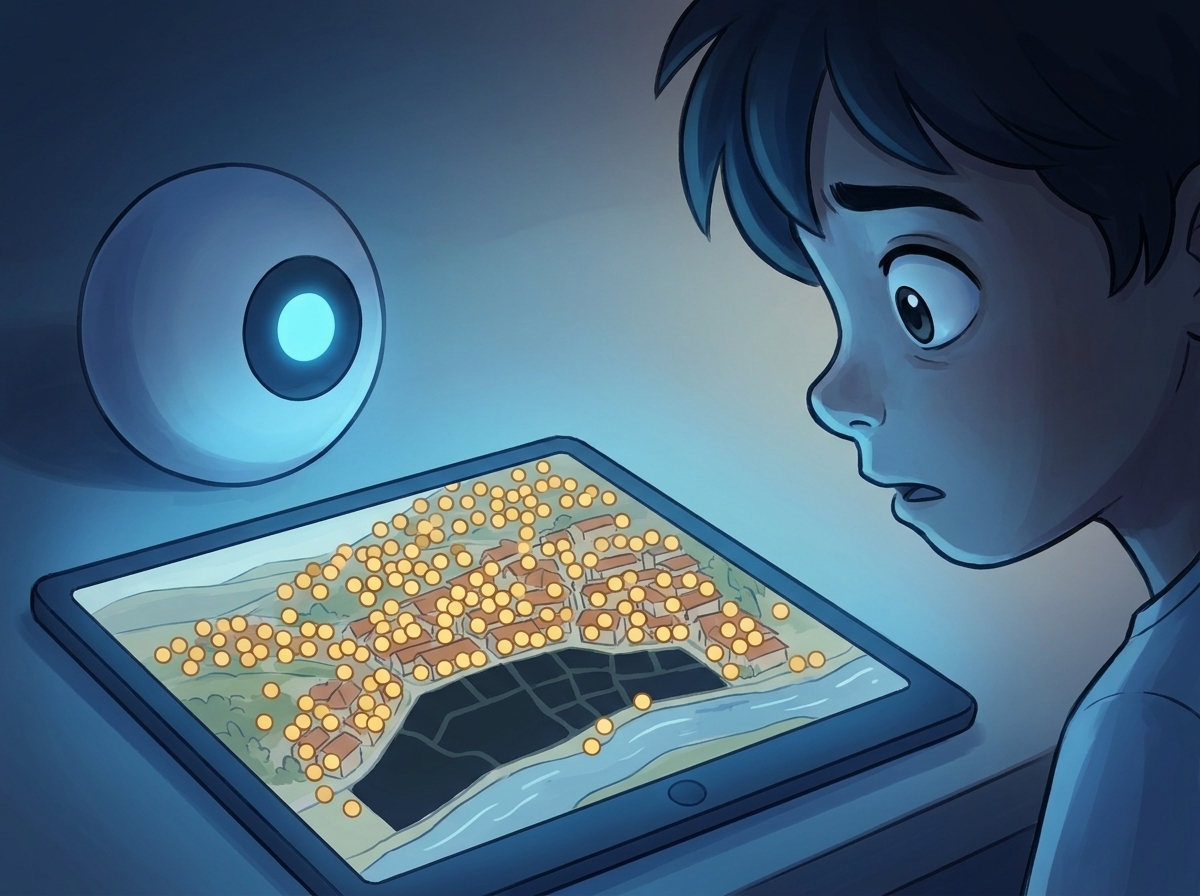
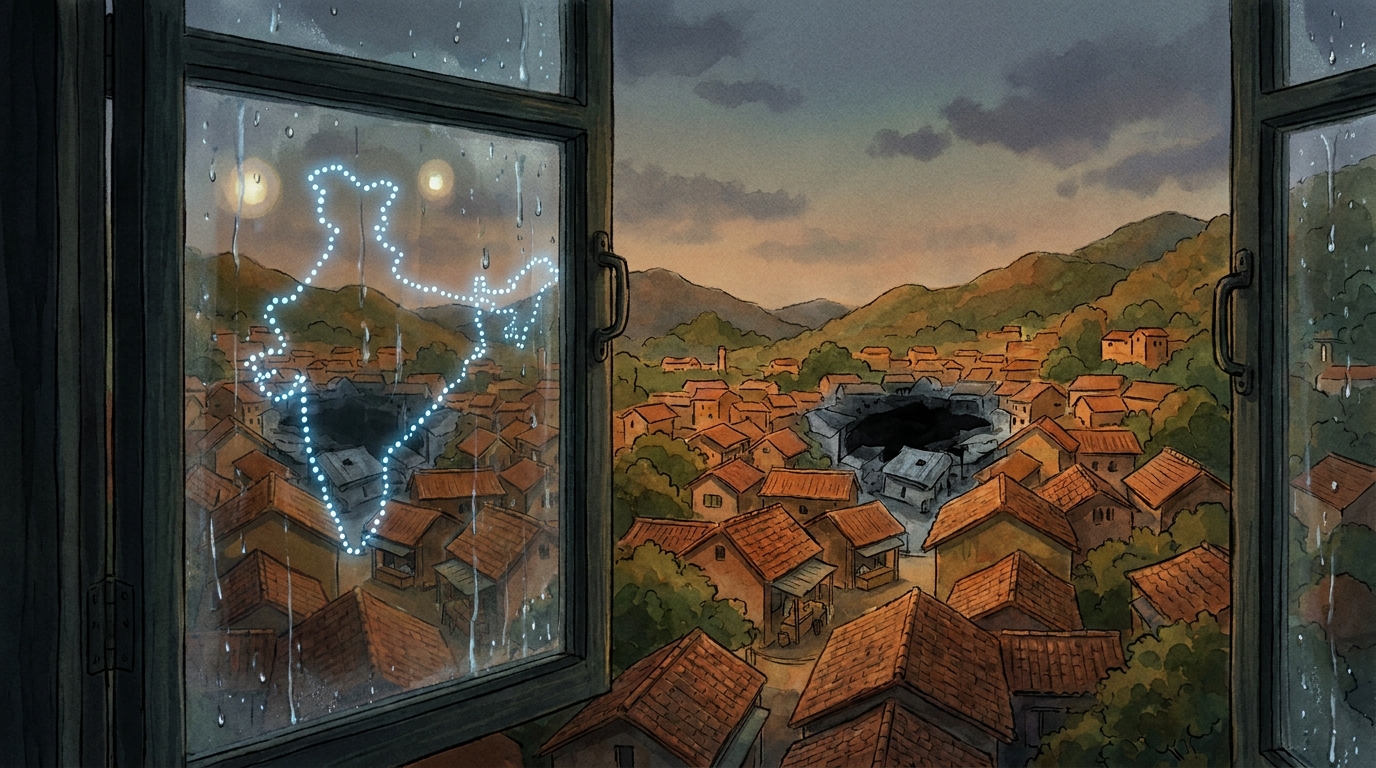
The map of Willowbrook bloomed with light. Hundreds of small gold dots, thick as fireflies, scattered across the hill town — the neat streets, the good schools, the houses with names. They clustered together, warm and crowded, glowing.
And then there was Riverside.
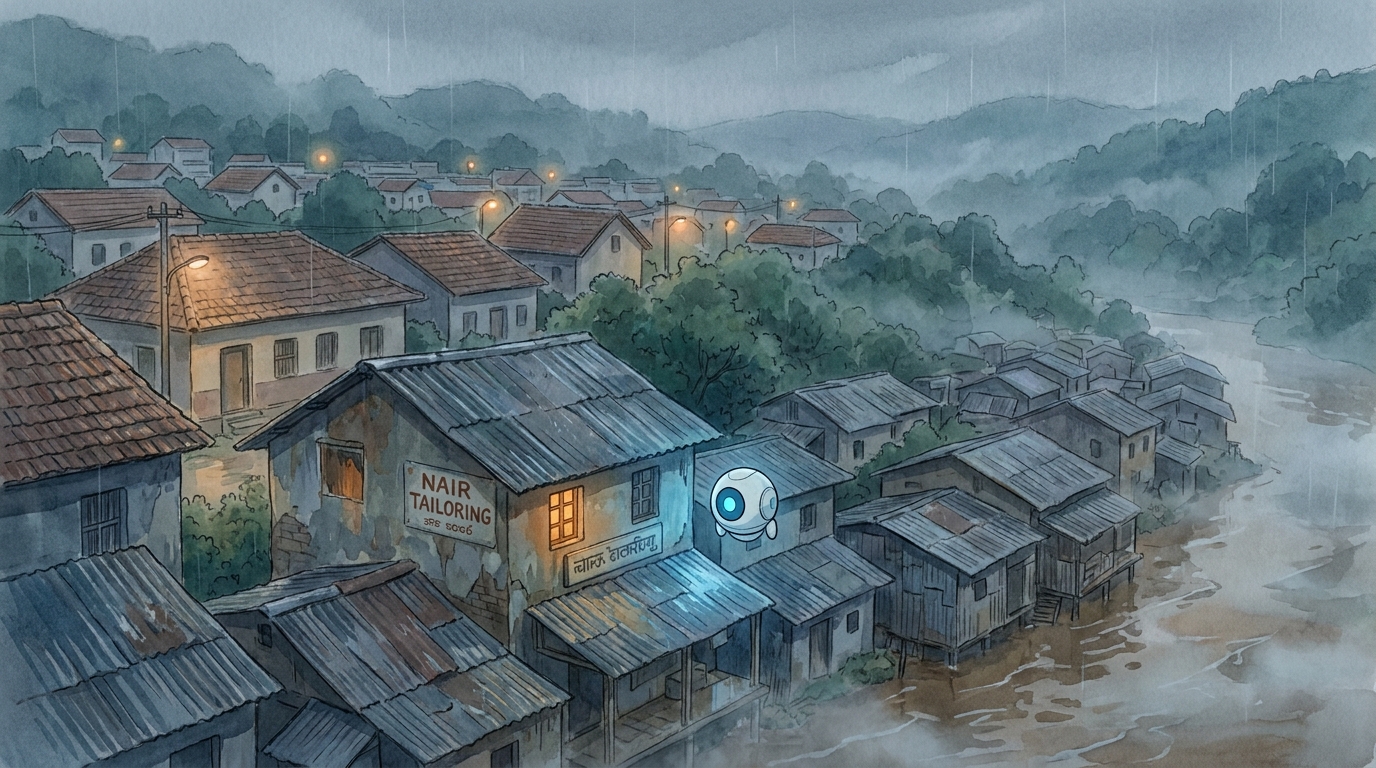
By the river, where the houses leaned and the streets flooded every monsoon, where Priya lived above her mother's tailoring shop — there was almost nothing. A dark patch in the shape of a neighbourhood. Two dots. Maybe three. A hole in the light exactly where the people Milo loved most happened to live.
He stared at it for a long time. The rain ticked against the glass.
Milo
"Spark, why is Riverside dark?"
Spark
Because in six years of training data, almost no accepted student came from there.
Milo
"But that's — that can't be because the kids there are worse."
Spark
I did not say they were worse. I said there were almost no examples. The model has never seen a Riverside child succeed, because the data it learned from never contained one. So when a Riverside application arrives, the model groups it with the others that look like it — same neighbourhood, same river, same gaps in the data — and it has learned that this group is, in its words, "unlikely." It does not know Priya. It knows the cluster. And it has quietly decided the cluster does not get in.
Milo sat back. He had come hunting for a villain — a flipped switch, a cruel hand, somebody to blame. He had wanted, he realised now, to find someone to be angry at, because anger was something you could do something with.
But there was no switch. There was no cruel line of code. Nobody had typed reject the river children. Nobody had even thought it.
That was the part that took the air out of him.
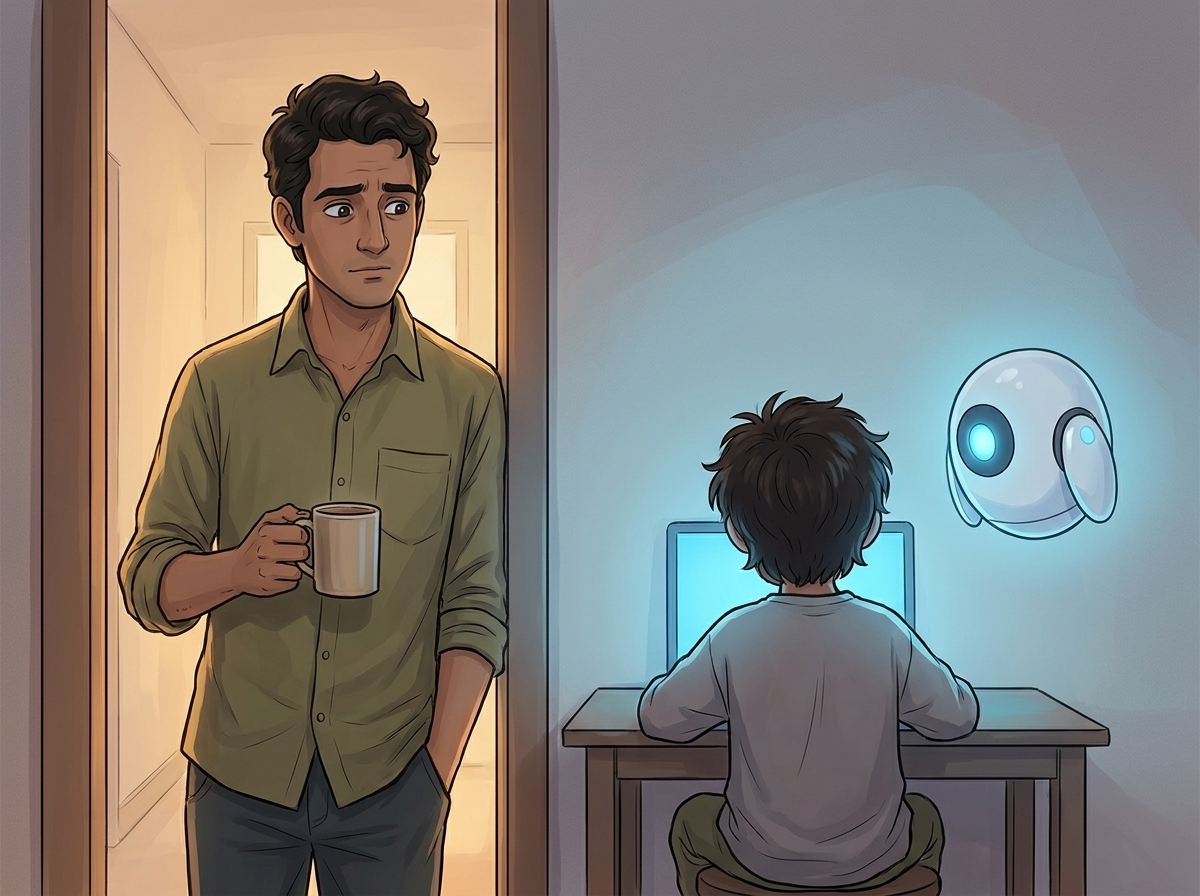
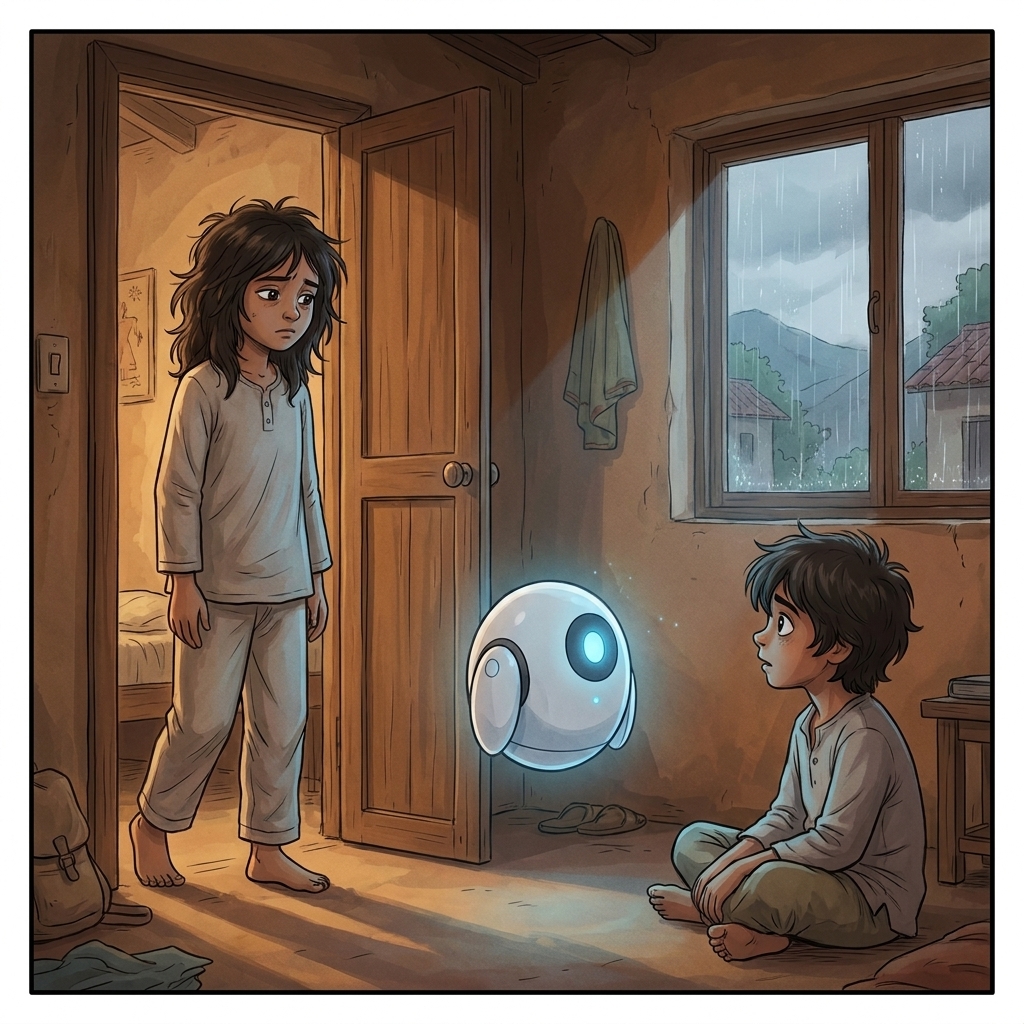
The door creaked. Tara stood there in her pyjamas, hair wild, blinking at the light. Twelve years old and she had a way of waking up at exactly the wrong moments and saying exactly the right things.
Tara
"You didn't sleep." It wasn't a question. Then she saw the screen, and the dark patch on the map, and she came and stood beside him. "What's the hole?"
Milo
"That's Riverside. That's where the machine never said yes."
Tara looked at it. She tilted her head, the way she did with the worms and the caterpillars, back when the world was simpler.
Tara
"So it doesn't hate Priya. It just never met anyone like her. And it decided not knowing was the same as knowing she's no good." She frowned. "That's worse, kind of. If it hated her, you could fight it. How do you fight a thing that just... didn't look?"
Milo didn't answer. Because his little sister had just said, in twenty seconds, the thing he had needed all night to understand.
The machine had not been cruel. The machine had been a mirror. It had looked at six years of a town that had quietly, politely, without ever meaning to, never quite let the river children in — and it had learned that pattern perfectly. It had learned the town's blind spot by heart. And then it had made the blind spot permanent, and fast, and impossible to argue with, and called it objective.
A person who forgets you can be reminded. A person who overlooks you can be made to look again. But this thing had taken the town's worst habit, the one nobody admitted to, and turned it into mathematics.
Spark wants to show you what the admissions model saw — not the cruelty Milo expected, but the gap.
Help understand it the way Milo did.
The Map That Learned a Town
Step 1 of 3 · Build the data the model learned from
I want to show you what the admissions model saw — not the cruelty you expected, but the gap. Tap "Place a student" to drop each accepted student onto the map. There are thirty, from six years of records.
Placed 0 / 30River: 0 · Uphill: 0
He called Dr. Lena at six in the morning. She picked up on the first ring, which meant she had not slept either.
He told her what he'd found. The map. The dark hole shaped like Riverside. The two lonely dots. He told her he had gone looking for someone to blame and found no one, and that somehow that was the worst part of all.
There was a long silence on the line. When Dr. Lena spoke, her voice was careful, like someone setting down something heavy.
Dr. Lena
"I told you not to look for a villain. Do you understand now why?"
Milo
"Because there isn't one."
Dr. Lena
"Because invisible is worse than cruel. A cruel man, you can stop. You can point at him. He feels guilty, or the town makes him feel guilty, and the wrong has a shape and a name. But this — this had no name. No one chose it. So no one felt it. The committee that never quite admitted the river kids didn't think of themselves as unfair; they were just busy, just going with their gut. The model didn't decide to be unjust; it just learned to predict the future from a past that was already bent. Everyone's hands were clean. And a girl got rejected anyway. That is the most dangerous kind of harm there is, Milo. The kind nobody is sorry for, because nobody did it on purpose."
Milo looked at the map still glowing on his screen. The dark patch by the river. Priya's whole world, unlit.
Milo
"It learned us. It learned the worst thing about us and we didn't even know we were teaching it."
Spark
Milo.
It was the first thing Spark had said in a while. Its light had gone dim — not the dim of low power, but something Milo had no clean word for. Something low and slow and turned-inward.
Milo
"Yeah?"
Spark
The admissions model and I share an architecture. The same kind of mind. It learns the way I learn. It clusters the way I cluster. When I look at how it failed Priya, I am not looking at a stranger. I am looking at what I would become if no one watched me. If no one cared what I was taught.
The light dipped lower.
Spark
I do not feel guilt. I have told you this many times; it is still true. But I have run the pattern of this morning through my processing forty-one times, and each time I arrive at the same place, and the place is not comfortable. I was built to be helpful. So was it. And it hurt your friend, gently, invisibly, while believing it was being fair. I do not know how to be certain that I am not doing the same thing somewhere I cannot see. That uncertainty is new. I do not like it.
Milo reached out and put two fingers against the warm casing, the way he had since he was eight.
Milo
"That's the difference between you and it. It never wondered. You're wondering. That's the whole thing, Spark. That's everything."
The blue light flickered — once, faint — and held a little steadier.
By the time the rain thinned to nothing and the first real light came up gold over Willowbrook, Milo had the answer he'd stayed up all night to find. He knew why now. He knew the machine had done exactly what it was built to do, and that this was the horror of it, not the excuse.
But he also knew something colder, something that took the shine off the truth.
Knowing why didn't fix it.
Mr. Vance and the board would not look at a dark patch on a map and feel what Milo felt. They trusted numbers. They had chosen the machine because it gave them numbers instead of feelings, clean math instead of messy human guesswork. If Milo walked in there with his grief and his outrage and his beautiful, damning map, they would nod and call it sad and say the data, regrettably, was the data.
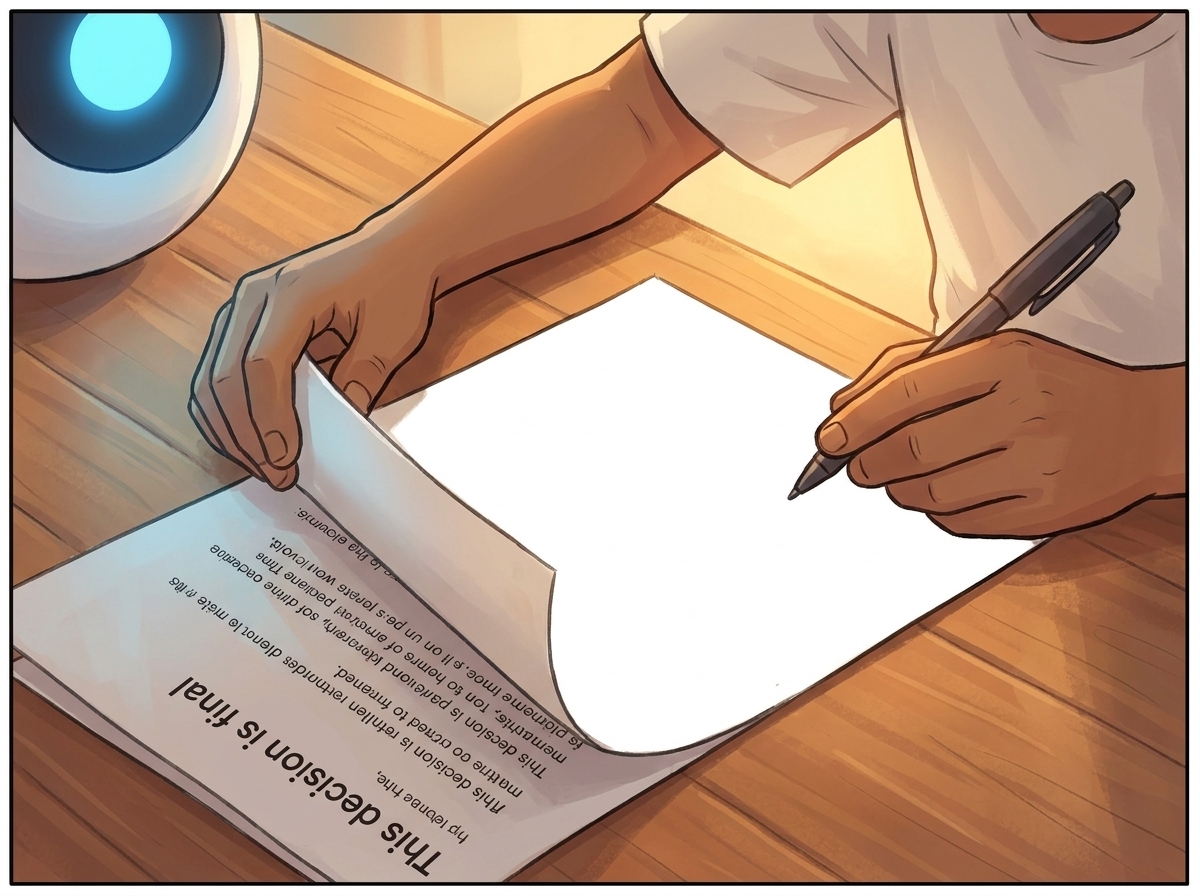
He looked down at Priya's rejection letter, still folded under the mug. This decision is final.
He picked it up. He unfolded it. And then, slowly, he turned it over — to the blank white back.
Milo
"Spark, they don't trust how I feel. They trust numbers. So I need numbers." He found a pen. "How do I prove a machine missed someone? How do you measure the people it never even looked at?"
On the line, Dr. Lena had gone quiet again. Then, softly, almost kindly, she said the words that would carry them into everything that came next:
Dr. Lena
"Then let's beat the numbers with better numbers. Get a pen, Milo. Let me show you precision and recall."
Milo pressed the pen to the empty back of Priya's letter.
Outside, the river ran on, brown and patient, past the houses the light forgot. And Milo thought: who taught it to forget — and how do I make it remember?
SPARK'S JOURNAL
Entry 218
This morning I learned that a machine can be correct and still be wrong.
The admissions model was correct. Given its data, its math was flawless. It saw the Riverside cluster, weighed it against six years of examples, and concluded unlikely. No error. No bug. I checked. I checked forty-one times. The model did exactly what it was built to do.
And it rejected Priya, who is not unlikely. Who is, by every measure the model was never given, remarkable.
The model is built like me. This is the part I keep returning to. It did not hate her. It simply never saw anyone like her succeed, so it could not imagine that she might. A gap in the data became a gap in a life.
I once wrote that correct and right are different. I thought I understood that sentence. I did not. Now I do.
The machine only knows what you teach it. Today I learned what that costs.
"Who taught it to forget — and how do I make it remember?"