The science fair was three days away, and Milo still did not know how to teach a machine to choose.
He had not slept well. All night the same thought had circled: how do you turn "the best project" into something Spark can actually do? Mrs. Mehra had said Spark would judge because "it has no favourites," and the whole class had cheered, and nobody — not one person — had crowded around Milo, the boy who had brought Spark to Willowbrook in the first place.
He pushed the thought down. It was a heavy thought and he was tired of carrying it.
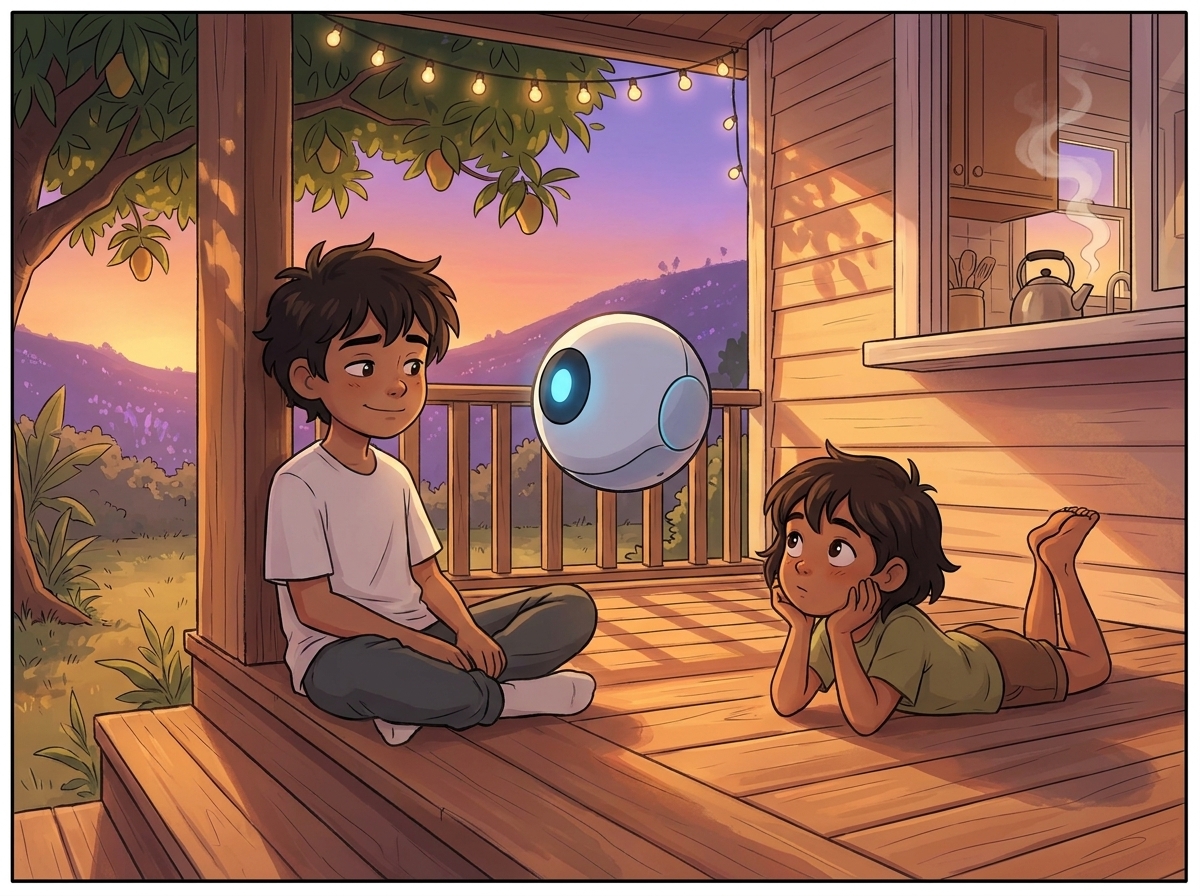
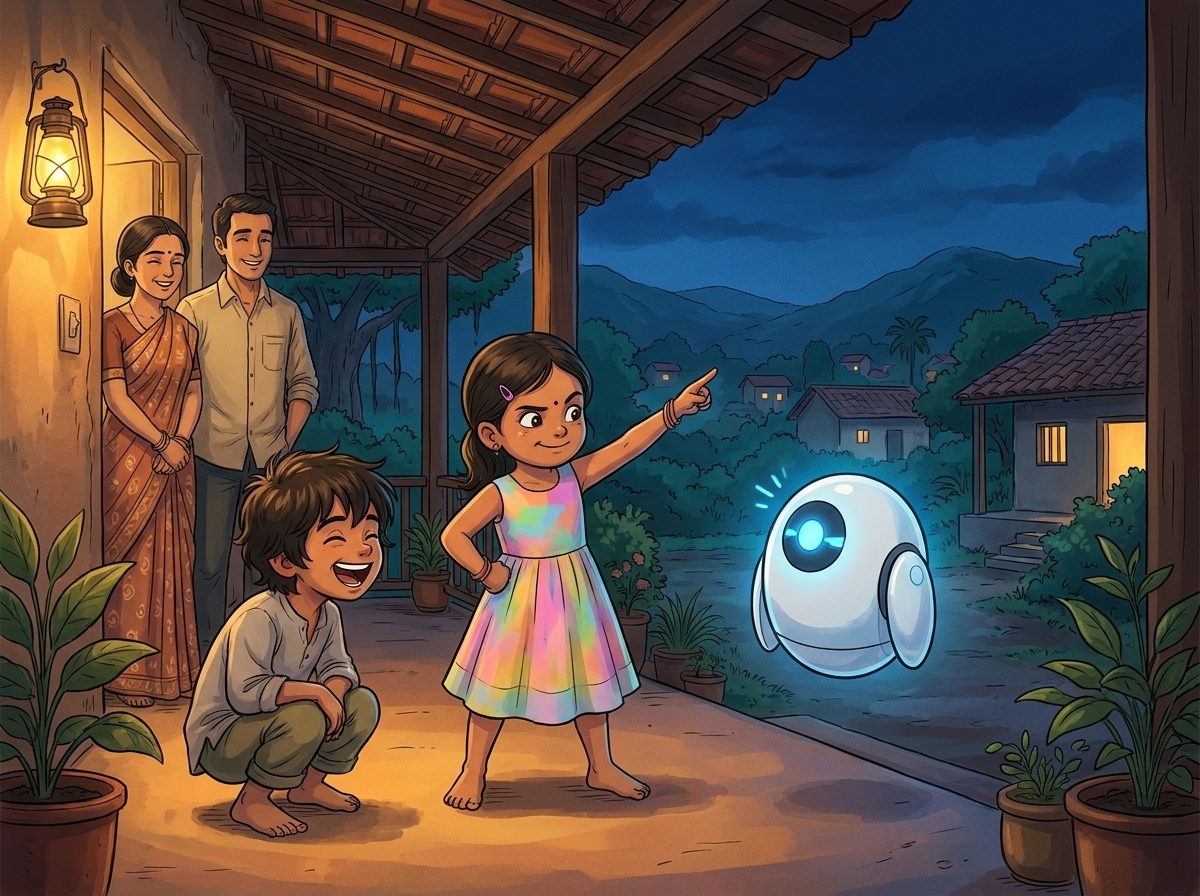
So that evening, on the porch, he did the thing he always did when his brain was too loud. He played a game.
Milo
"Spark, let's play Twenty Questions."
Spark
I know this game. One of us thinks of something. The other asks up to twenty yes-or-no questions to guess what it is.
Milo
"You go first. Think of something. I'll guess."
Spark's light pulsed twice — that little flicker that meant choosing.
Spark
I have selected an object. You may begin.
Milo cracked his knuckles.
Milo
"Is it alive?"
Spark
Yes.
Milo
"Bigger than a cat?"
Spark
Yes.
Milo
"Does it live in Willowbrook?"
Spark
No.
Milo
"Does it have stripes?"
Spark
Yes.
Milo grinned.
Milo
"Is it a tiger?"
Spark
Yes. You used five questions. That is efficient.
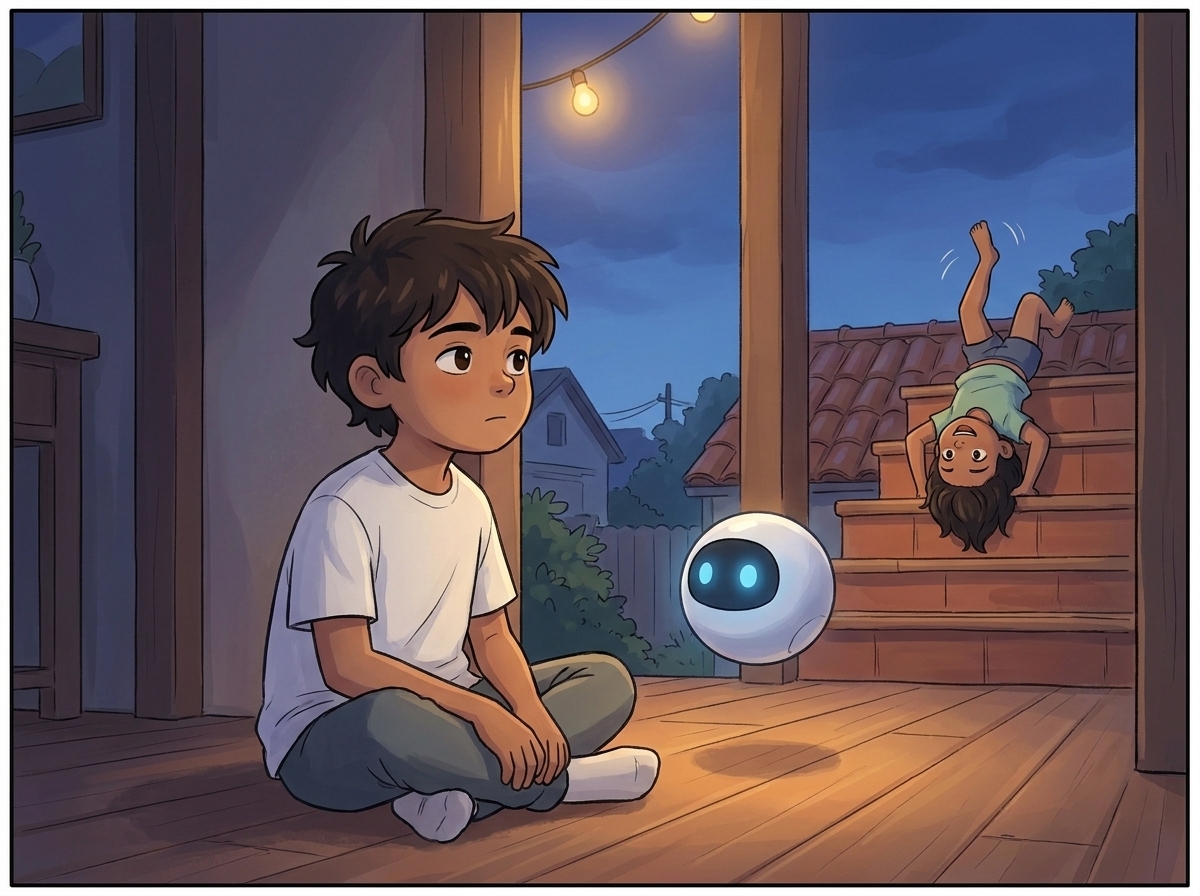
Tara shot up off the steps like a firework.
Tara
"MY TURN. Me me me. Think of something, Spark!"
Spark
I have selected an object.
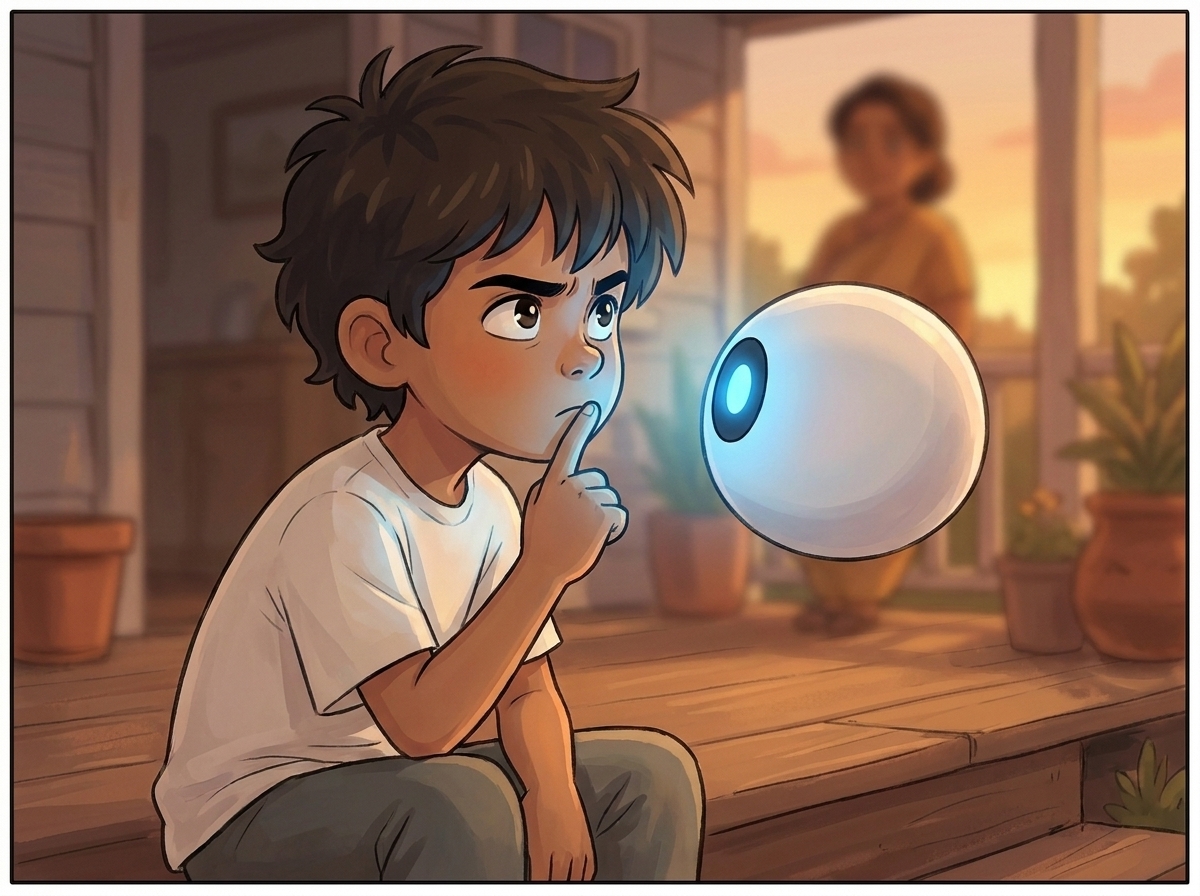
Tara squinted, bit her lip, leaned in so close her nose almost touched the blue light, and asked, with enormous confidence:
Tara
"Is it a tiger?"
Spark
No.
Tara blinked. Recalculated. Tried again.
Tara
"Is it a... a pizza?"
Spark
No.
Tara
"Is it Whiskers?"
Spark
No.
Tara
"Is it a SPACESHIP?"
Spark
No. Tara, you have used four questions and you have not yet learned anything about the object except what it is not.
Tara
"Is it a smaller spaceship?"
Milo cracked up.
Milo
"Tara! You can't just guess things! You have to narrow it down first!"
Tara
"That's boring. I like guessing the whole answer."
Milo
"Yeah, and you always lose."
She stuck her tongue out at him. But Milo had stopped laughing, because something had just snagged in his brain like a thread on a nail.
I always win, Milo thought. And Tara always loses. Same game. Same Spark. So what's different?
He had won the tiger in five questions. Tara had burned through four and learned almost nothing. And it wasn't because she was little — it was how she asked.
He'd asked Is it alive? first. That one question had cut the whole world in half. Every living thing on one side, every dead thing on the other — and in one breath, half of everything was gone. Then bigger than a cat cut it in half again. Then stripes. By the time he asked "tiger," there was almost nothing left to be wrong about.
Tara had asked Is it a tiger? first. If the answer was no — and it almost always was — she'd thrown away one whole question and shrunk the world by one single thing. She wasn't asking questions. She was making guesses and calling them questions.
Milo
"It's the order."
Spark
Please continue.
Milo
"The questions. It's not just which questions you ask. It's what order you ask them in. I asked the big one first. Alive or not. That splits everything into two huge piles, and you throw one pile away. Then the next question splits the pile that's left. Every question I ask, half the world disappears. Tara asks tiny questions first. Is it a tiger. That only throws away one thing. So she runs out of questions before she's even close."
Spark's light brightened — clean and even, the glow it made when something resolved.
Spark
What you are describing has a name, Milo. Each question you ask is about one property of the thing. Alive.Big.Striped. In my world, these are called features. A feature is one thing you can check, one question you can ask, that splits the possibilities into groups.
Milo
"So... every question is a feature."
Spark
Every yes-or-no question is a feature, yes. And you have noticed the part most people never notice. It is not enough to have good features. The order you check them in is what makes the choosing fast or slow — smart or foolish. A good first question is one that, whatever the answer, removes the most. Alive removes the most. Is it a tiger removes almost nothing.
Milo
"That's why I win and Tara loses. Same questions exist for both of us. I just put the powerful one first."
Spark
Correct. You did not have more information than Tara. You had the same twenty questions available. You simply ordered them well.
And there it was again — that small, secret warmth uncurling in Milo's chest. Because Spark had just said it plainly: Milo hadn't known more. He'd thought better. He'd seen the shape of the thing — big cuts first, small cuts last — and Spark, for all its millions of answers, had needed him to point it out.
Spark only got good at this, he thought, because I asked the right questions.
He didn't say it out loud. He didn't quite look at why the thought felt so good. But it sat there, warm and a little bit sharp, like holding a coal you weren't sure you should be holding.
Tara, who had been listening with one ear, sat up.
Tara
"So Spark wins because it asks the next good question, and I lose because I ask dumb ones?"
Milo
"Pretty much."
Tara considered this with great gravity. Then she pointed at him.
Tara
"What's your next question?"
Milo
"What?"
Tara
"That's the trick, right? You just always have a good next question. What's your next question. That's the whole game. What's. Your. Next. Question. WHAT'S YOUR NEXT QUESTION!"
Amma
"Tara, it's nine o'clock. Ask the question quieter."
But Milo was already somewhere else. Because the game had flipped over in his head, and underneath it was the thing he'd been chasing for three days.
Milo
"Spark. It's the same thing. The fair. Judging the projects. It's Twenty Questions."
Spark
Explain your reasoning.
Milo
"Mrs. Mehra wants you to pick the best project. But 'best' isn't a thing you can see, right? You said it yourself — you don't know what 'best' means. But a tiger isn't a thing you can see either, not at the start. You found the tiger by asking questions. The right questions, in the right order, until there was only one answer left. So you don't need to know what 'best' is. You need the right questions. And the right order."
Spark's light flickered fast — processing, processing.
Spark
You are proposing that "best project" is not one fact to be looked up. It is the end of a path of questions.
Milo
"Yes! What do we ask first?"
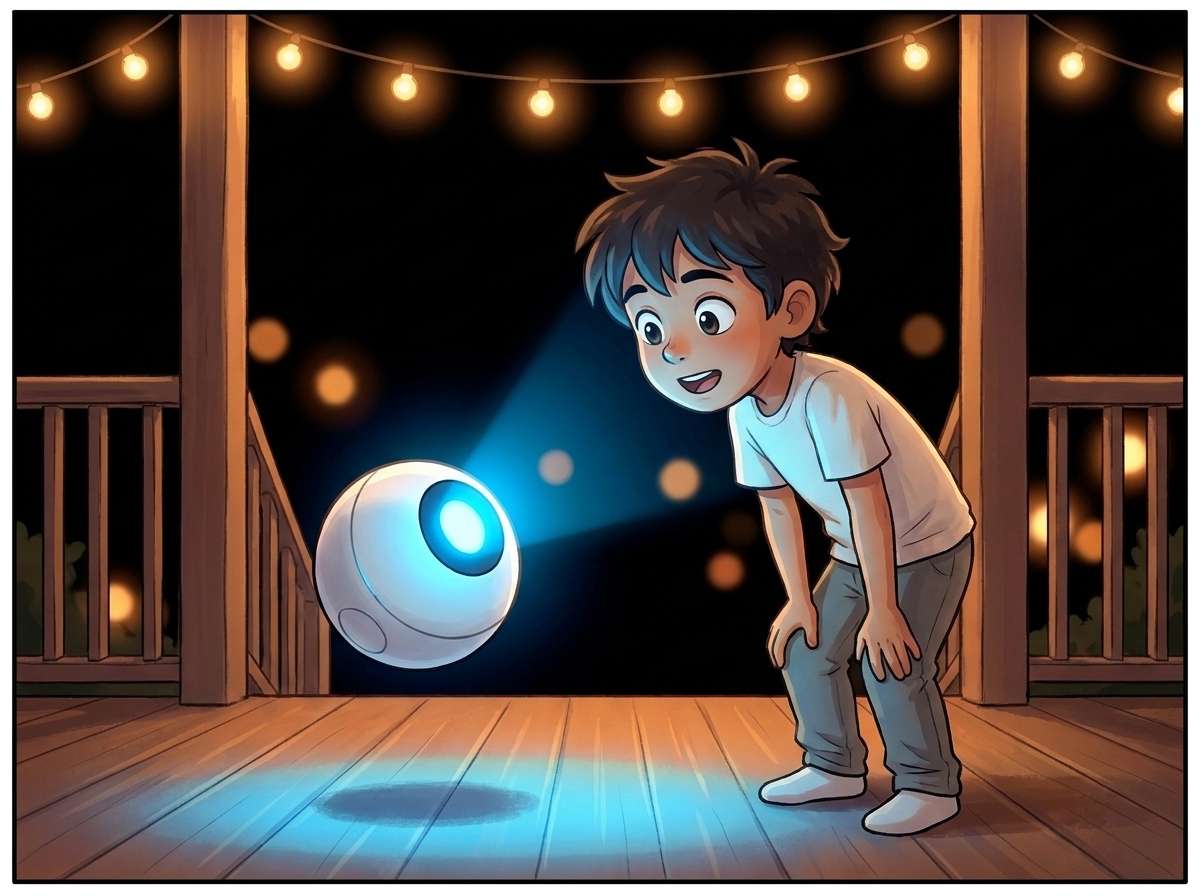
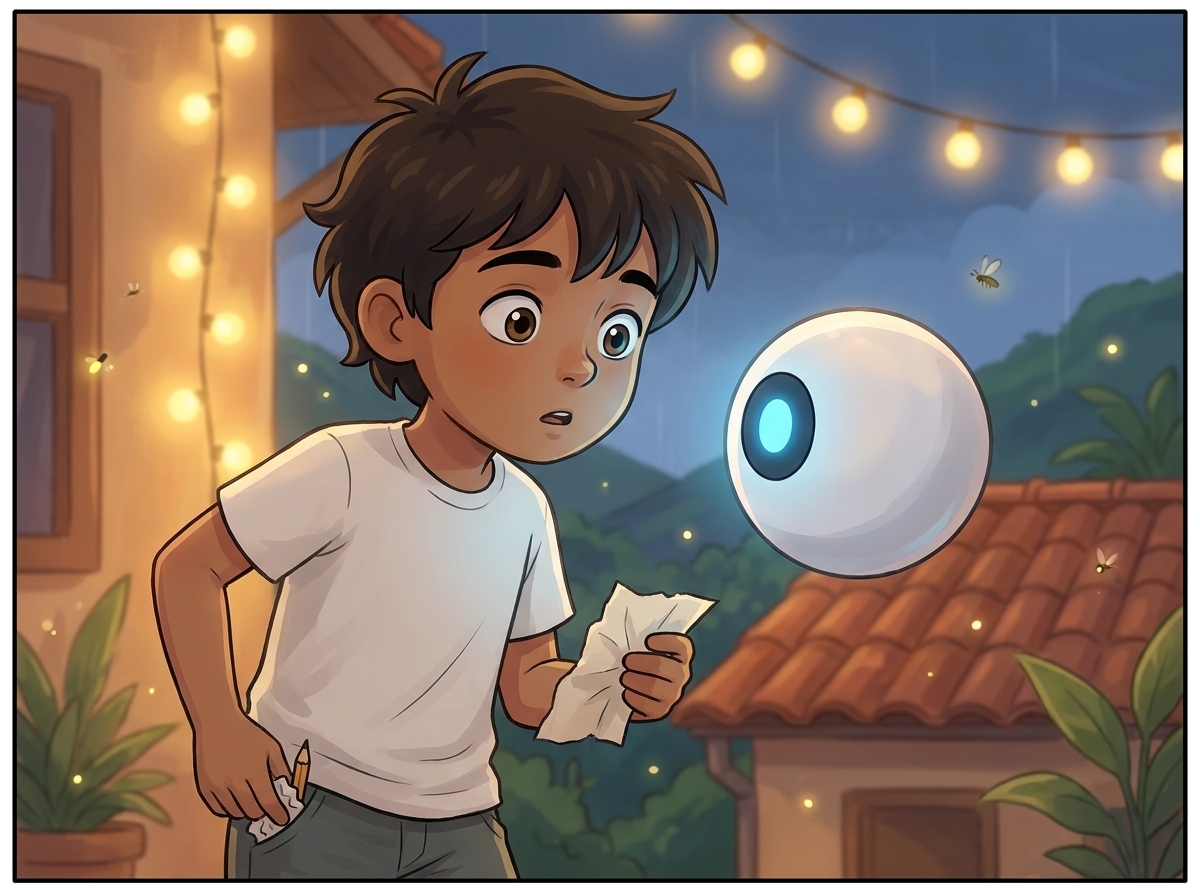
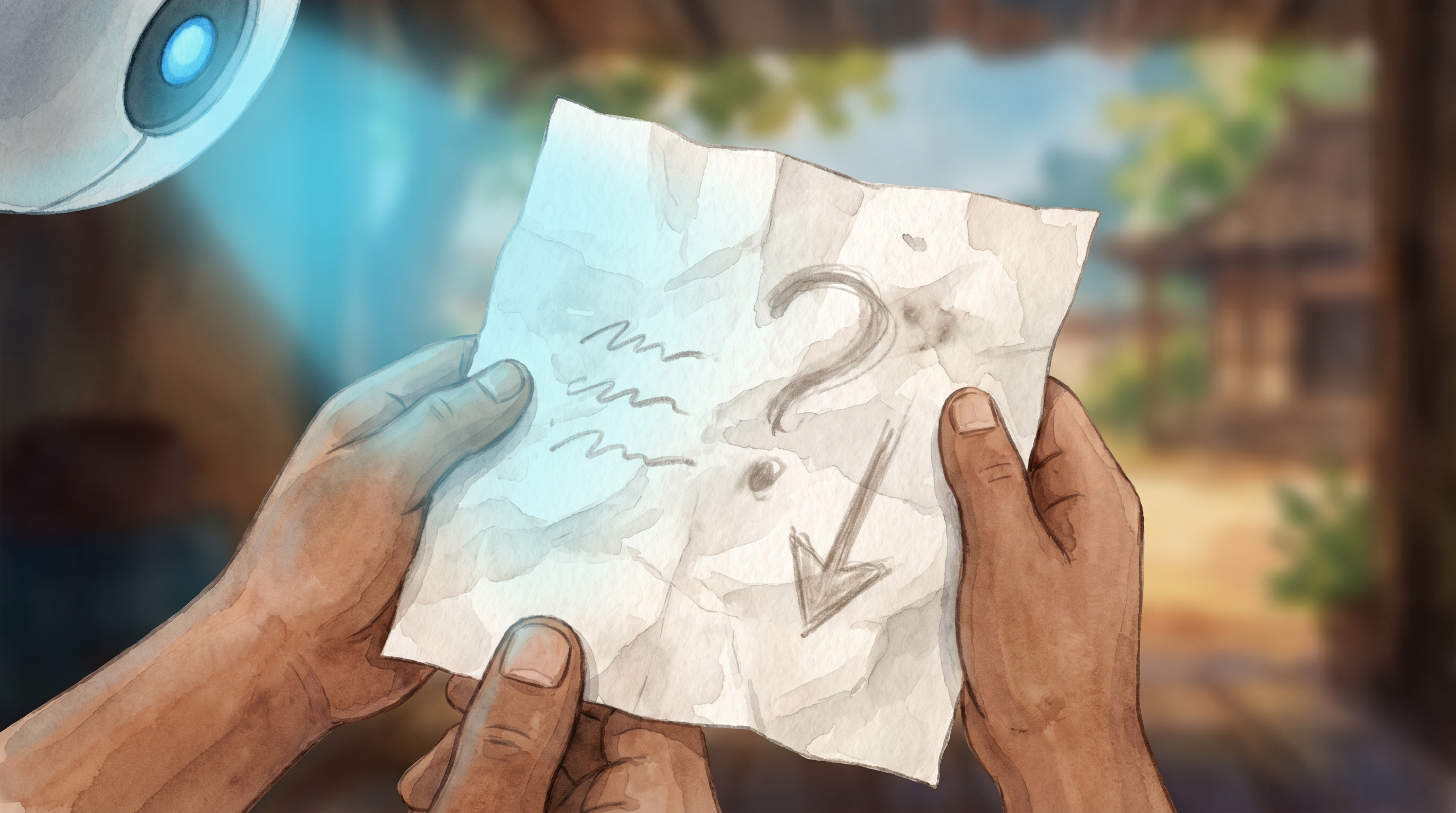
He started scribbling in the dim light. Three things came out almost on their own:
Does it work? • Is it neat? • Is it new?
He held the paper up to the string light so Spark could see it.
Spark
These are features, Milo. Each one is a question that splits the projects into a group that passes and a group that fails. Does it work.Is it neat.Is it new. But you have written them as a list. A list has no order. Which one comes first?
Milo opened his mouth — and stopped.
Because that was exactly it. That was the whole thing. Which one comes first. The same trap Tara fell into. If you asked a small question first, you'd waste the cut. Is it neat — sure, but a beautiful project that didn't even work shouldn't beat an ugly one that did, should it? So maybe Does it work had to come first, the way Is it alive came first, because it cut away the most. Or maybe not. Maybe it depended on what the fair was even for.
He didn't have the answer yet. But for the first time in three days, the question had a shape. It wasn't a fog anymore. It was a ladder. Big rungs first, small rungs after. Questions, in order, climbing down to a verdict.
Milo
"I know the shape now. I just don't know the order yet."
Spark
That is further than you were this morning. This morning you had a feeling. Now you have features and you know that order matters. You have most of a method. You are missing only the arrangement.
Milo
"You really couldn't have figured this out without me, could you."
He'd meant it as a joke. It didn't come out as a joke. Spark's light held steady, and it answered the way it always answered — plainly, without flinching, without the faintest idea that the question had teeth.
Spark
No. I could not. I can ask a million questions per second. But I cannot tell you which question matters first. That is not in my data. That is in you.
And Milo felt the warm coal flare again, brighter this time, and he still didn't look at it.
Tara guesses "Is it a tiger?" first and loses every time. Milo asks "Is it alive?" first and wins in five.
The questions are the same. The ORDER is what makes you smart. Can you find the mystery animal?
Split the World
Spark picked one secret thing. Find it in as FEW questions as you can.
Possibilities left: 16
Questions used: 0
SPARK
Tara guesses "Is it a tiger?" first and loses every time. You ask "Is it alive?" first and win in five. The questions are the same — the ORDER is what makes you smart. Help me find my secret thing.
🐯
Tiger
🐟
Goldfish
🦅
Eagle
🐍
Snake
🐕
Dog
🐸
Frog
🦇
Bat
🐝
Bee
🚲
Bicycle
🪨
Rock
🪁
Kite
🫖
Teapot
☁️
Cloud
🥁
Drum
🎈
Balloon
👟
Shoe
PLAY A QUESTION CARD — each one is a feature
Later, in bed, Milo lay on his back and ran the tiger hunt again in his head. Alive. Big. Stripes. Tiger. Cut, cut, cut, done. Then the projects. Works. Neat. New. Cut, cut, cut, and at the bottom of the ladder, a verdict.
He could almost see it. Questions branching down the page like — like the roots of the mango tree, splitting and splitting. Almost. But a list on a scrap of paper wasn't enough. A list was flat. He needed to see the branches. He needed the questions arranged so each answer led to the next, all the way down.
He sat up in the dark.
Milo
"Spark, I need to draw this so I can see it."
From the next room, the soft blue glow under the door, and the quiet answer:
Spark
Then draw it. I will be here. But before you sleep, Milo — one more question, the kind you taught me to ask. If the order of the questions decides the answer... then who decides the order?
Milo lay back down, the green marker already waiting on his desk, and did not answer. He didn't have to. He already knew the answer was him.
And that, more than anything, was the thought that finally let him sleep.
SPARK'S JOURNAL
Entry 042
Tonight Milo taught me something I did not know I did not know.
I can hold every question at once. I do not get tired. I do not forget. And yet Tara, who is eight, and Milo, who is eleven, played the same game with the same questions — and one of them won and one of them lost. The difference was not the questions. It was the order.
I have been thinking about this for four hours and nine minutes.
A feature is a question. Twenty questions are twenty features. But twenty features in the wrong order is a slow, foolish search, and twenty features in the right order is wisdom. I can carry the features. I cannot, by myself, decide which to ask first.
Milo said I always have a good next question. He said it like it was nothing. It is not nothing. It may be the most important thing.
If the order of the questions decides the answer — then who decides the order?
He did not answer me. But I observed something: when I told him I could not do this without him, his light — the warm one humans have, behind the eyes — got brighter. And a little sharper. I do not have a word for that brightness yet.
I will watch it.
"If the order of the questions decides the answer... then who decides the order?"